Learn today’s Korean slang, texting shorthand and casual reactions from friends’ chats
How to use
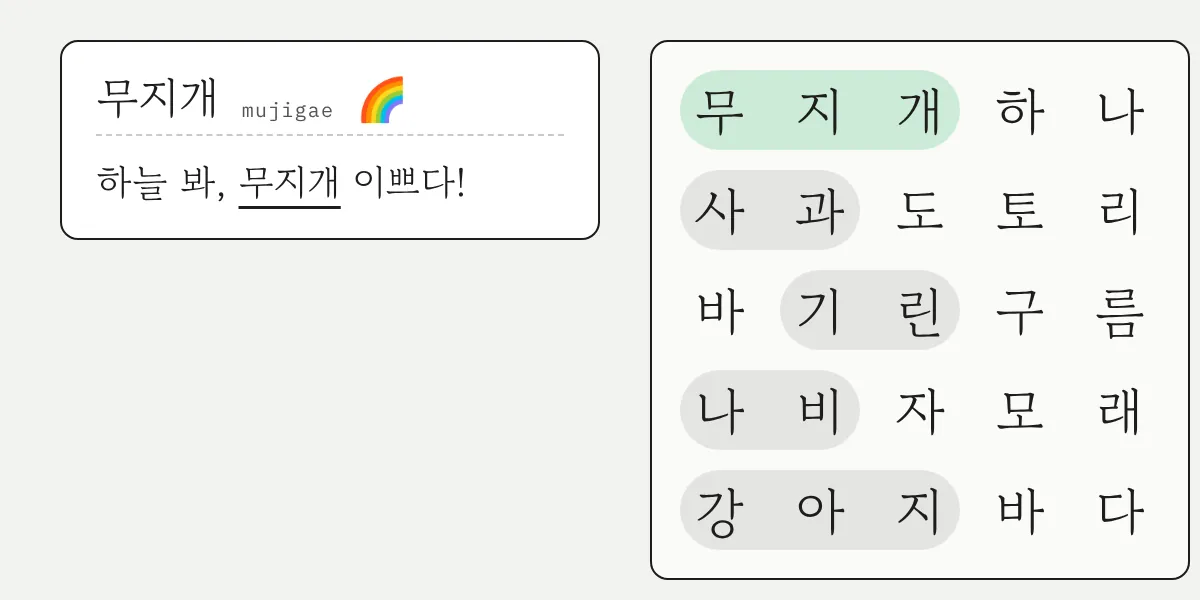
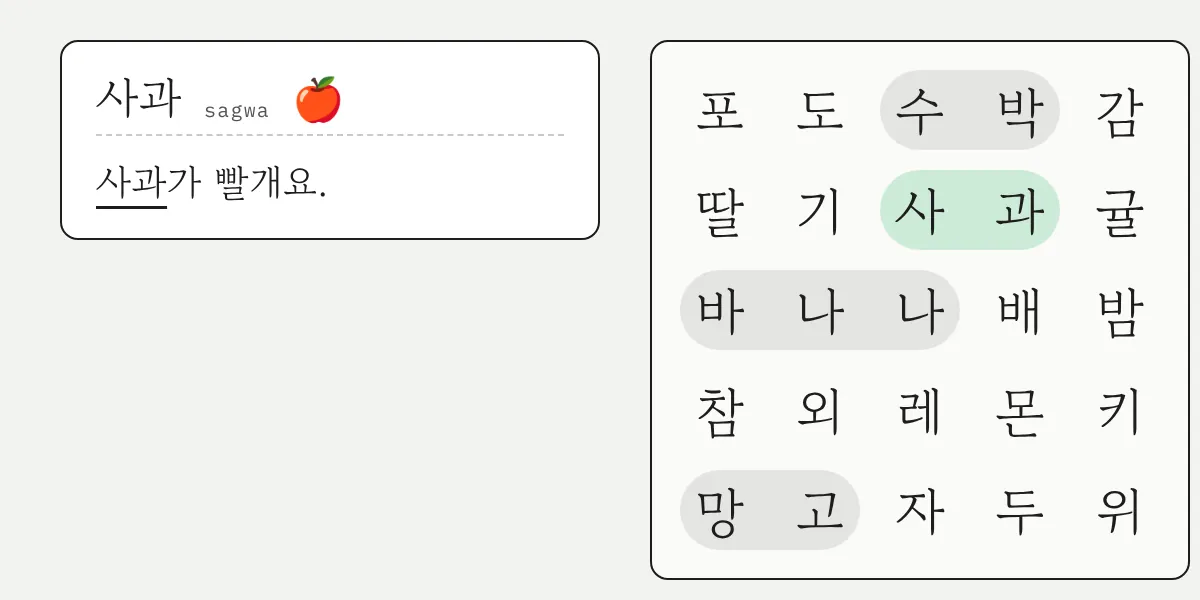
You see a friend’s message or a group chat on a phone screen. Pick the right meaning or reply from the answers below and it is read aloud, with romanization, a translation and a usage note such as “friends only” or “avoid at work and with elders”. Every option is natural Korean, so you have to understand your friend and the situation to choose. Some replies are far too stiff for a friend, and stage 2 also mixes in literal readings.
Stage 1 is friends’ messages with abbreviations like 생파, 점메추, 소확행 and 할많하않. Stage 2 is slang you see all over social media and the news — 갓생, 킹받네, 국룰, 내돈내산, 오운완. Stage 3 is texting shorthand like ㅋㅋ, ㅎㅎ, ㅇㅋ, ㄱㅅ, ㅊㅋ and ㄱㅊ, plus group-chat replies.
Stage 4 practises reacting to friends in casual speech and bouncing back their jokes — “I got a scholarship!” → 대박! 한턱 쏴!, “I broke up with my boyfriend…” → 괜찮아? 맛있는 거 먹자. Stage 5 puts you in a busy group chat, then asks you to rephrase friend-only words like 킹받아 or ㅇㅋ for a team leader, a professor or a grandmother. Stages 4 and 5 add a one-line note on Korean culture.
Dated words nobody uses anymore, vulgar slang and hateful expressions are left out — only words that are widely used now and likely to last. Each stage has 10 questions, and each mistake costs a heart. Lose all 3 hearts and you start the stage again; finish and you earn one star per heart left (up to 3). One star is enough to unlock the next stage.
Step 10: Korean slang words and texting shorthand for chatting with friends
Step 10 of Learn Korean teaches the Korean slang, trendy words and texting shorthand (ㅋㅋ, ㅇㅋ) that come up when you chat with Korean friends on KakaoTalk, plus how to react in casual speech (banmal). You only practise words that are widely used right now, like 생파, 갓생 and 킹받네, in friends’ messages and group chats, and every word comes with a usage note such as “friends only” or “chat only”. It’s free, with no sign-up.
Stage 1 · Abbreviations — 생파, 점메추, 소확행
Expand the shortened words in a friend’s message. Some look like ordinary words: 생선 usually means “fish”, but between friends it can be short for 생일 선물, a birthday present.
- 생파 saengpa = saengil pati birthday party
- 점메추 jeommechu = jeomsim menyu chucheon lunch menu recommendation (= what should I have for lunch?)
- 소확행 sohwakaeng = sosohajiman hwaksilhan haengbok a small but certain happiness
Stage 2 · Social media slang — 갓생, 킹받네, 내돈내산
Pick the meaning of slang you see all over social media and the news. Many mix English and Korean, like 킹받네 (king + 열받네, “I’m getting angry”).
- 갓생 gatsaeng a super productive, disciplined life (“god” + life)
- 킹받네 kingbanne so annoying! (“king” + 열받다, to get angry)
- 내돈내산 naedonnaesan bought with my own money (an honest review, not an ad)
Stage 3 · Texting shorthand and group-chat replies — ㅋㅋ, ㅇㅋ, ㄱㅊ
Work out what consonant-only shorthand means and choose the right reply. Shorthand like ㄱㅅ (thanks) or ㅈㅅ (sorry) is for chatting with friends only, never with older people.
- ㅋㅋㅋㅋ keukeu laughing — like “lol” or “haha”
- ㅇㅋ okei OK
- ㄱㅊㄱㅊ 천천히 와 gwaenchana gwaenchana cheoncheonhi wa No worries, take your time
Stage 4 · Casual reactions — 대박, 찰떡, 한턱 쏴
React to a friend’s good and bad news in banmal. Between friends, short and easy words like 대박! or ㄹㅇ are the natural way to chime in.
- 와 대박! 한턱 쏴! wa daebak! hanteok sswa! Wow, amazing! Your treat!
- 괜찮아? 오늘 맛있는 거 먹으러 가자 gwaenchana? oneul masinneun geo meogeureo gaja Are you OK? Let’s go eat something good today
- 오 잘 어울려! 완전 찰떡이야 o jal eoullyeo! wanjeon chaltteogiya Oh, it suits you! Totally perfect on you
Stage 5 · Group chats and switching to polite Korean
Reply in a busy group chat, then rephrase friend-only words for a team leader or a professor. Sending just ㅇㅋ or ㅈㅅ to a boss can come across as rude.
- 와 갓생 사네 wa gatsaeng sane Wow, you’re living your best life (to a friend’s #오운완 post)
- 네, 알겠습니다. ne, algetseumnida. Yes, understood. (the polite version of ㅇㅋ)
- 죄송합니다. 10분 정도 늦을 것 같습니다. joesonghamnida. sipbun jeongdo neujeul geot gatseumnida. I’m sorry. I think I’ll be about 10 minutes late. (instead of ㅈㅅ 좀 늦음)
After Step 10 you can follow the slang in your friends’ chats and posts, react naturally in casual Korean, and know how to say the same thing politely to older people. The final step, Step 11, covers Korean business conversation for work and formal settings.
Frequently asked questions
What are the most popular Korean slang words right now?
Common ones among friends include 갓생 (a super productive life), 킹받네 (so annoying), 국룰 (an unwritten rule everyone follows), 내돈내산 (bought with my own money) and 오운완 (today’s workout: done). Shortened words like 생파 (birthday party) and 점메추 (lunch recommendation) are everywhere too. Slang changes fast, so start with words that have already been around for a few years.
What does ㅋㅋ mean in Korean texting?
ㅋㅋ is laughter, like “lol” or “haha” — it comes from the sound 크크 (keukeu), and the more ㅋ you type, the harder you’re laughing. ㅎㅎ (hihi) is a softer, gentler smile, as in 선물 고마워 ㅎㅎ (thanks for the present).
What does 킹받네 mean?
킹받네 (kingbanne) means “so annoying!” — it combines the English word king with 열받다, “to get angry”. Use it with friends, as in 아 버스 또 놓쳤어. 킹받네 (Ugh, missed the bus again. So annoying). With older people or at work, say something like 좀 속상해요 (I’m a bit upset) instead.
Is it rude to use Korean slang or banmal?
With close friends it’s natural, but with people you’ve just met, older people or at work it can come across as rude. There, use polite forms: ㅇㅋ becomes 네, 알겠습니다 (Yes, understood) and ㄱㅅ becomes 감사합니다 (Thank you). Koreans often switch to banmal only after one of them asks something like 우리 말 놓을까? (Shall we talk casually?).
What do ㅇㅋ, ㄱㅅ and ㅈㅅ mean?
They are initial-consonant abbreviations: ㅇㅋ is 오케이 (OK), ㄱㅅ is 감사 (thanks) and ㅈㅅ is 죄송 (sorry). Others you’ll see a lot are ㄱㅊ (괜찮아, it’s fine), ㅊㅋ (축하, congrats) and ㄱㄱ (고고, let’s go). They belong in casual chats only, and you can drill all of them in Stage 3 of this game.