What this game trains you to write
A lot of Korean is spelled differently from how it sounds. You hear [으막] but write 음악; you hear [가치] but write 같이. This game trains two things. First, where the consonants and vowels sit on the standard Korean (2-set) keyboard, until your fingers know the keys. Second, hearing Korean and writing it down with the right spelling and spacing. By the end, the goal is to type Korean words without looking at the keys, spell words correctly even when the sound misleads you, and take down short everyday and workplace sentences by ear.
Learn the 2-set keyboard (keyboard stages 1–6)
Consonants sit under your left hand and vowels under your right. Every Hangul syllable starts with a consonant, so once the layout is in your fingers your hands alternate left and right. You start with single letters, move on to syllables with a final consonant, then the ⇧ Shift letters ㄲ ㄸ ㅃ ㅆ ㅉ and ㅒ ㅖ, combined vowels like ㅘ ㅝ ㅢ, and finally whole words. A wrong key doesn’t go in, and at the end you get your accuracy and keys per minute.
Words with and without a final consonant (dictation stages 1–2)
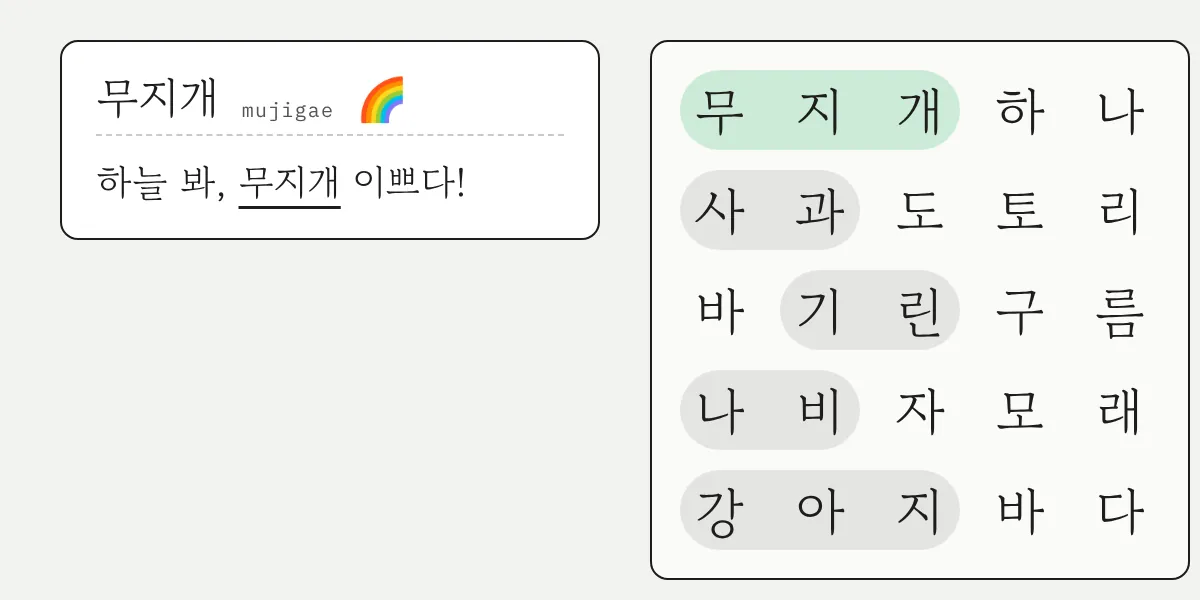
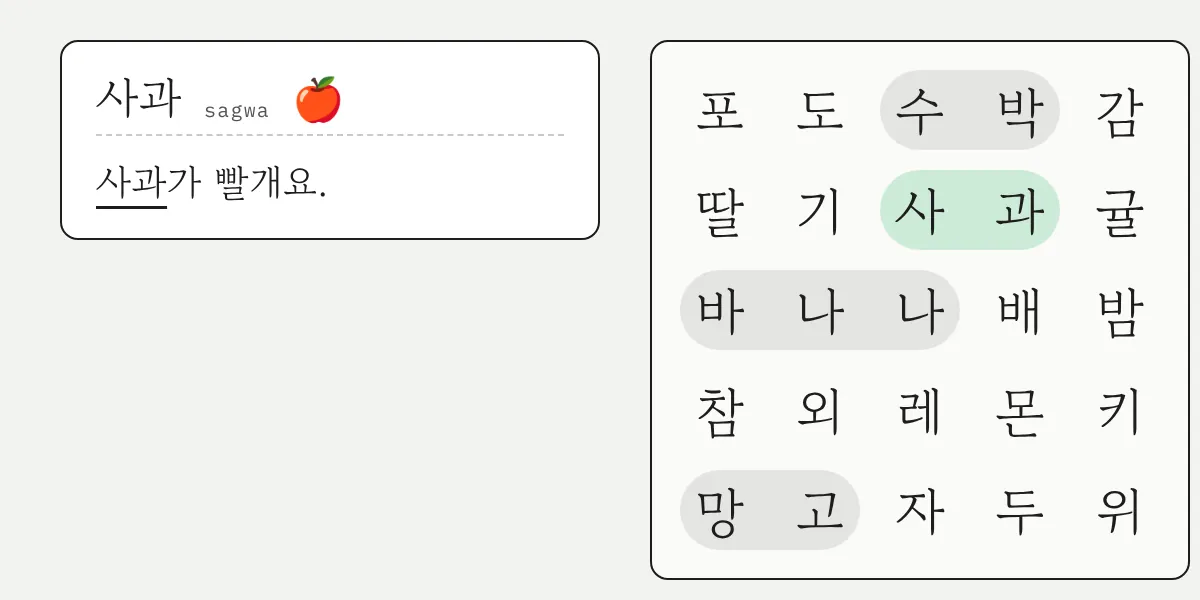
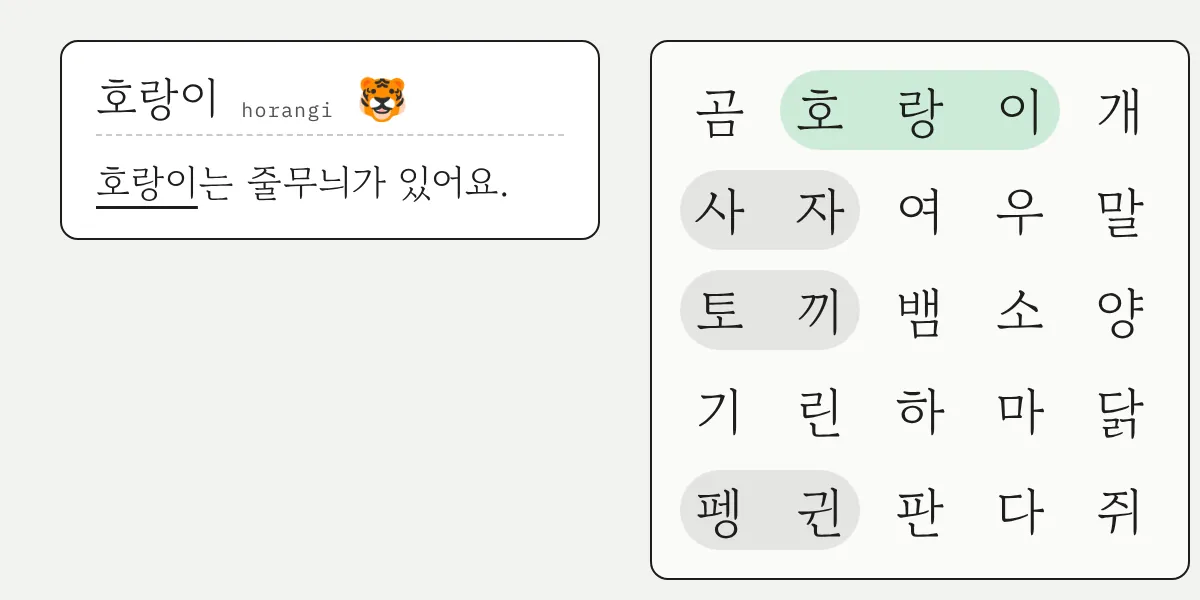
You begin with words like 나무, 바다 and 우유 that have no final consonant, then write words like 가방, 친구 and 시장 that are spelled the way they sound. The aim here is to hear final consonants — the ㄹ in 선물, the ㅂ in 지갑, the ㅇ in 공항 — and write the right one.
Words that sound different from their spelling (dictation stage 3)
You hear a final consonant moving to the next syllable (음악 [으막], 한국어 [한구거]), sounds turning nasal (국물 [궁물], 감사합니다 [감사함니다]), ㄷ/ㅌ meeting 이 (같이 [가치]), a weakened ㅎ (좋아요 [조아요]) and tense sounds (학교 [학꾜], 식당 [식땅]). After you check, the game shows the short rule behind each one.
Double consonants, combined vowels and double finals (dictation stage 4)
Words like 빵, 떡 and 쓰레기, vowels like those in 의사, 회사 and 예뻐요, and finals that only make their basic sound — 꽃 [꼳] and 닭 [닥]. A final consonant can only sound like one of seven: ㄱ ㄴ ㄷ ㄹ ㅁ ㅂ ㅇ. So the ㅊ in 꽃 or the ㄺ in 닭 is something you have to know from the word, not hear.
Sentences and spacing (dictation stages 5–6)
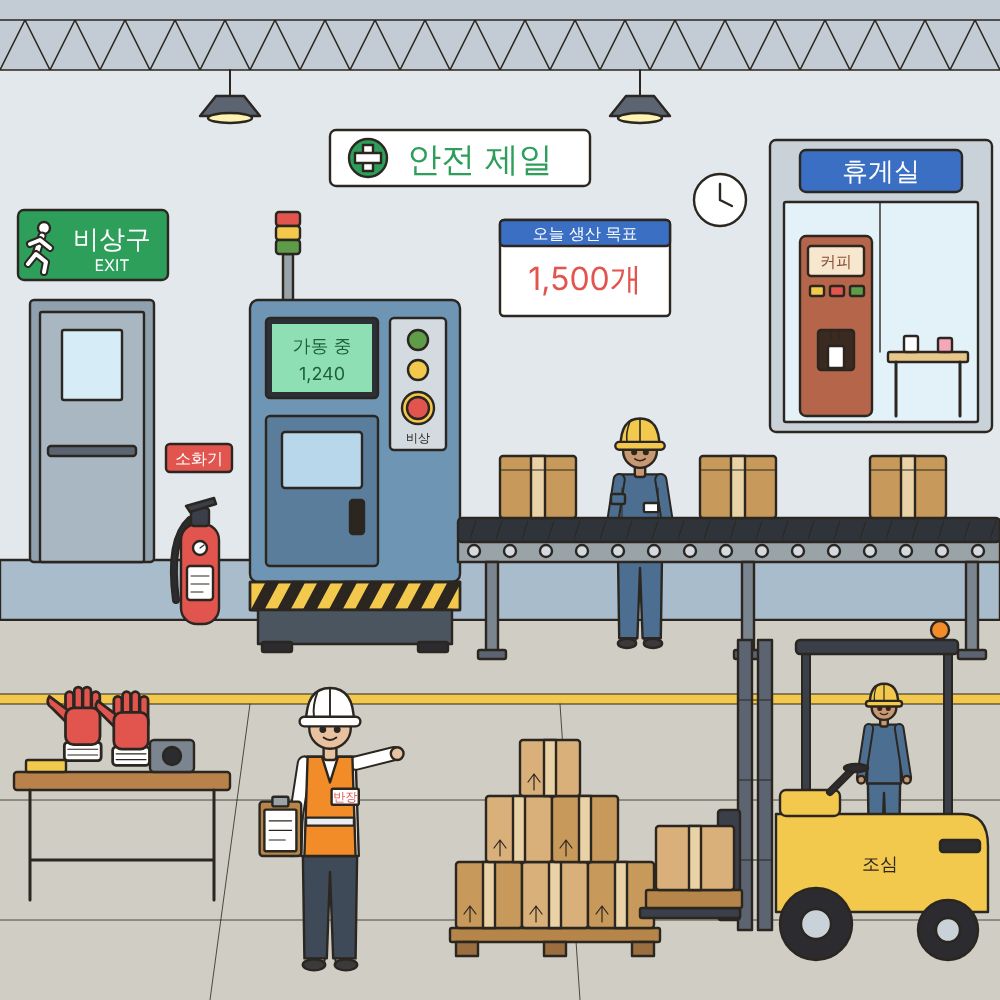
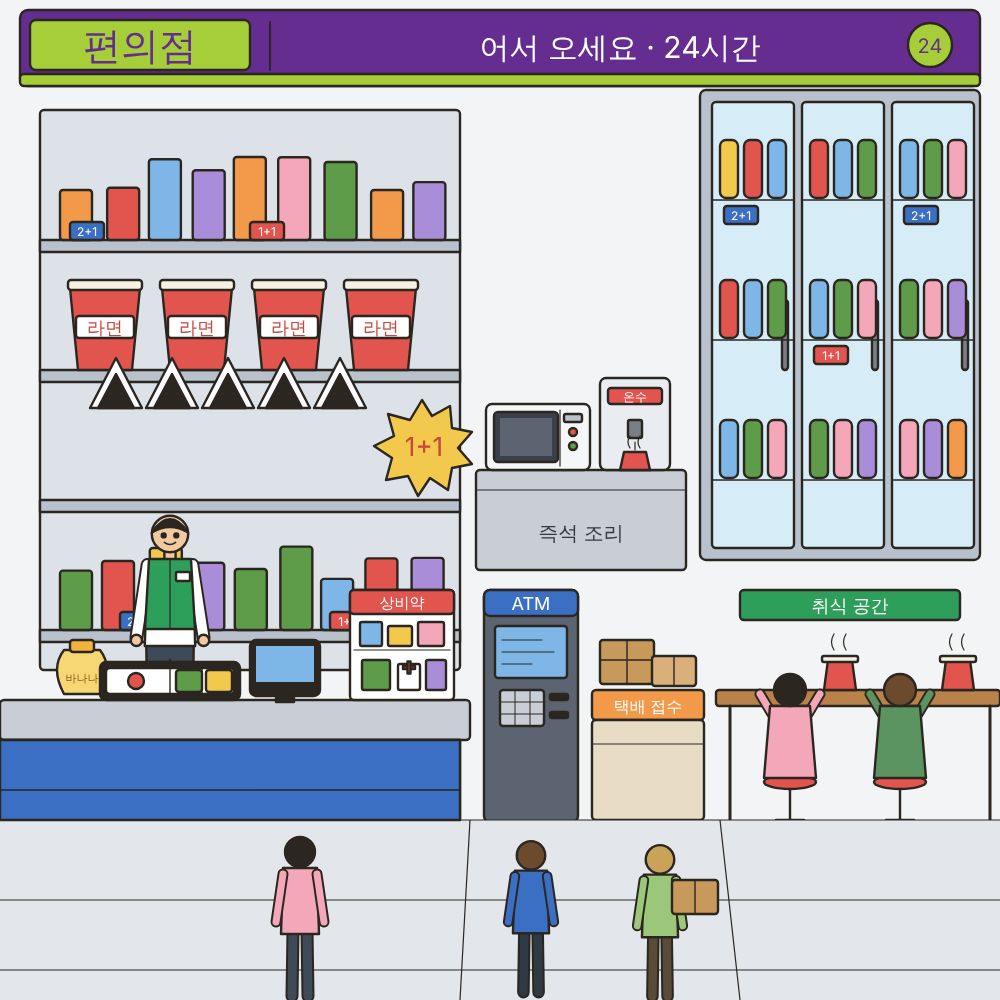
Short sentences like 물 좀 주세요 and 지금 몇 시예요?, then everyday and workplace lines like 안전모를 쓰세요, 오늘 잔업 있어요? and 카드로 계산할게요. Even with every letter right, the answer only counts if the spacing matches, so you learn where the word breaks go. Punctuation is optional.