Neighbors, deliveries, the clinic, the bank, small talk — everyday Korean for life in Korea
How to use
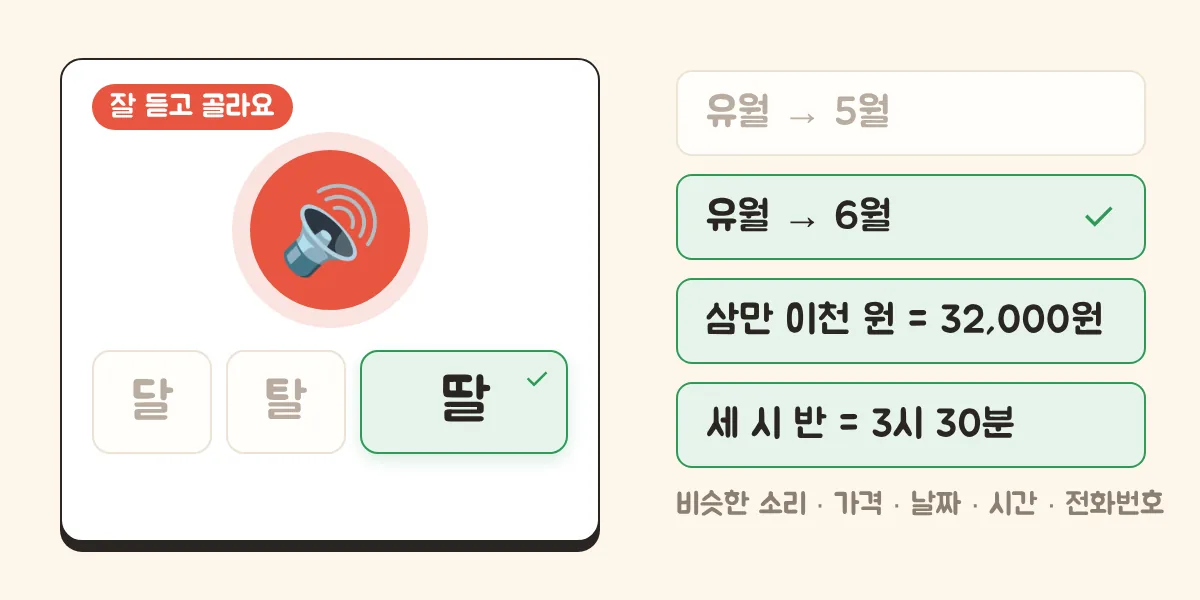
A neighbor, a staff member or a coworker says something, shown in text and read aloud. Pick the most natural Korean reply from the answers below and it is read back to you, with romanization, a translation, the rule and a one-line note on life in Korea. Every option is natural Korean, but only one fits what was said and the situation — so you really have to understand it.
Stage 1 is your first week in Korea: getting a SIM at the phone store, a bank account and debit card, topping up a transit card at the convenience store, shopping at Daiso, ordering at cafés and restaurants, taxis, buses and asking for directions, and greeting neighbors in the elevator — plus how to say 한 번만 다시 천천히 말씀해 주세요 when you miss what staff said. Stage 2 is month one: registering your address, the fixed-date stamp and records at the community center, immigration, switching to a plan that passes identity checks, recycling, half-price parcels at the convenience store and the delivery driver’s call, EMS at the post office (contents, air or sea, the label), a self-service print café, sending money abroad, giving a delivery rider your door code and unit number, and booking a clinic by phone.
Stage 3 is month three: describe symptoms, allergies and drowsy medicine at the clinic and pharmacy, and handle vaccinations and health certificates at the public health center, Olive Young, the hair salon, the dry cleaner and laundromat, a Karrot meetup and noise between floors — plus the dentist, viewing and renting a flat, the building management office, daycare and school, the vet and the gym. Stage 4 is month six: small talk and reactions with coworkers and acquaintances (밥 먹었어요?, 잘됐다, 어떡해) mixed with plans, requests, refusals and apologies (-ㄹ까?, -자, 좀 어려울 것 같아, 덕분이에요), along with team dinners, days off, sick leave, asking the landlord for repairs, wedding invitations, condolences and housewarmings. Stage 5 is year one: read four-line KakaoTalk chats, group chats, phone calls and face-to-face talks (changed plans, a misdelivered parcel, maintenance fees, a secondhand deal, a scam text, a company notice) and answer who, when, where and what.
Most replies use the polite -요 style you hear most in daily life; with friends you use casual banmal. Each stage has 10 questions, and each mistake costs a heart. Lose all 3 hearts and you start the stage again; finish and you earn one star per heart left (up to 3). One star is enough to unlock the next stage.
Everyday Korean phrases for living in Korea — what you learn in Step 9
Step 9 of Learn Korean teaches the everyday Korean that foreigners living in Korea use every day. You hear what neighbors, delivery drivers, clinic and bank staff, coworkers and friends say — from elevator greetings, café orders and recycling to renting a flat, small talk, team dinners, plans, requests and polite refusals — and pick the most natural reply. It’s free and needs no sign-up.
Stage 1 · Week 1 (SIM, bank, café, restaurant, taxi, neighbors)
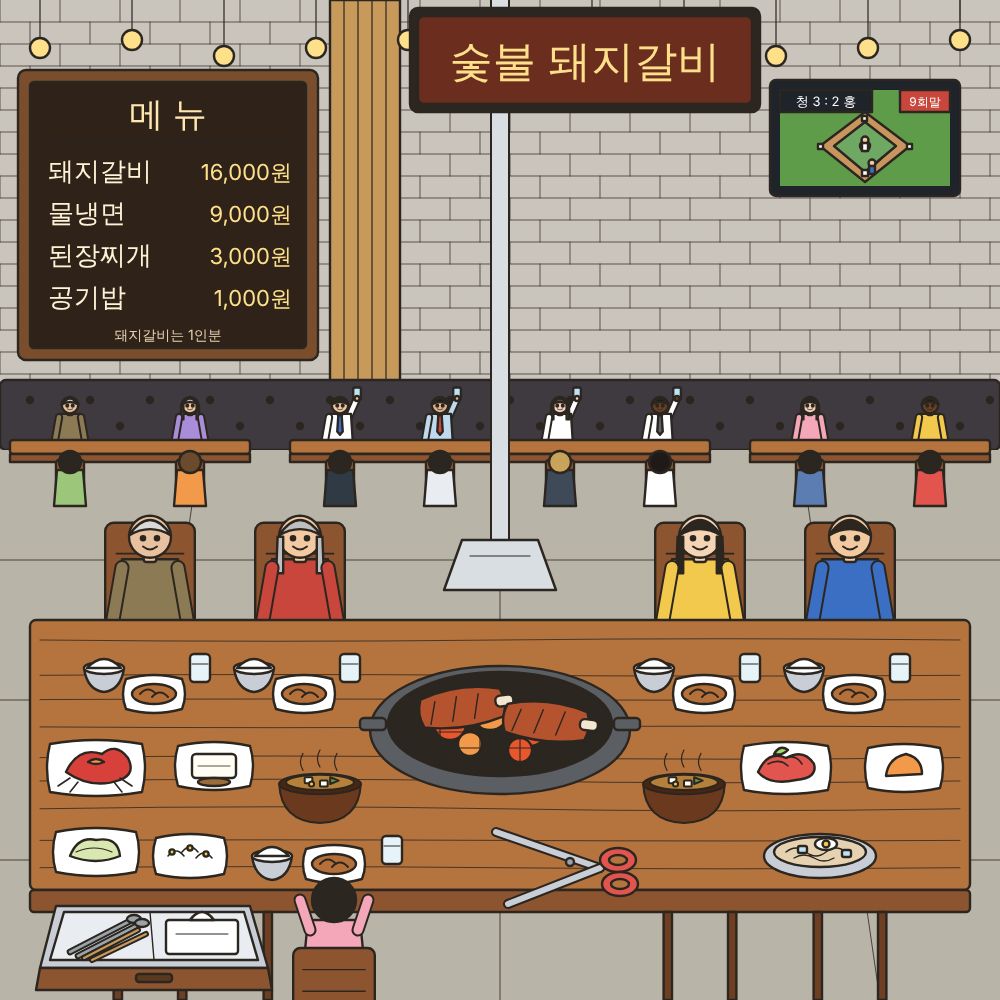
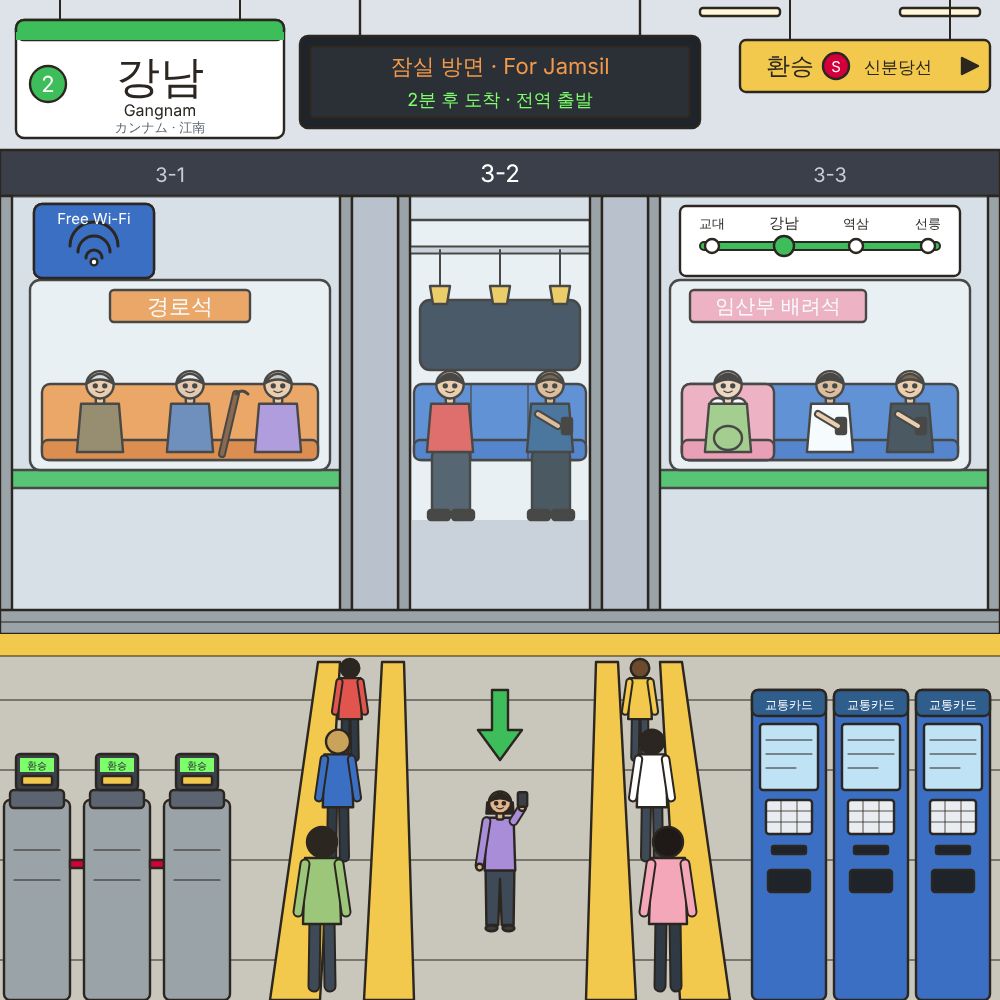
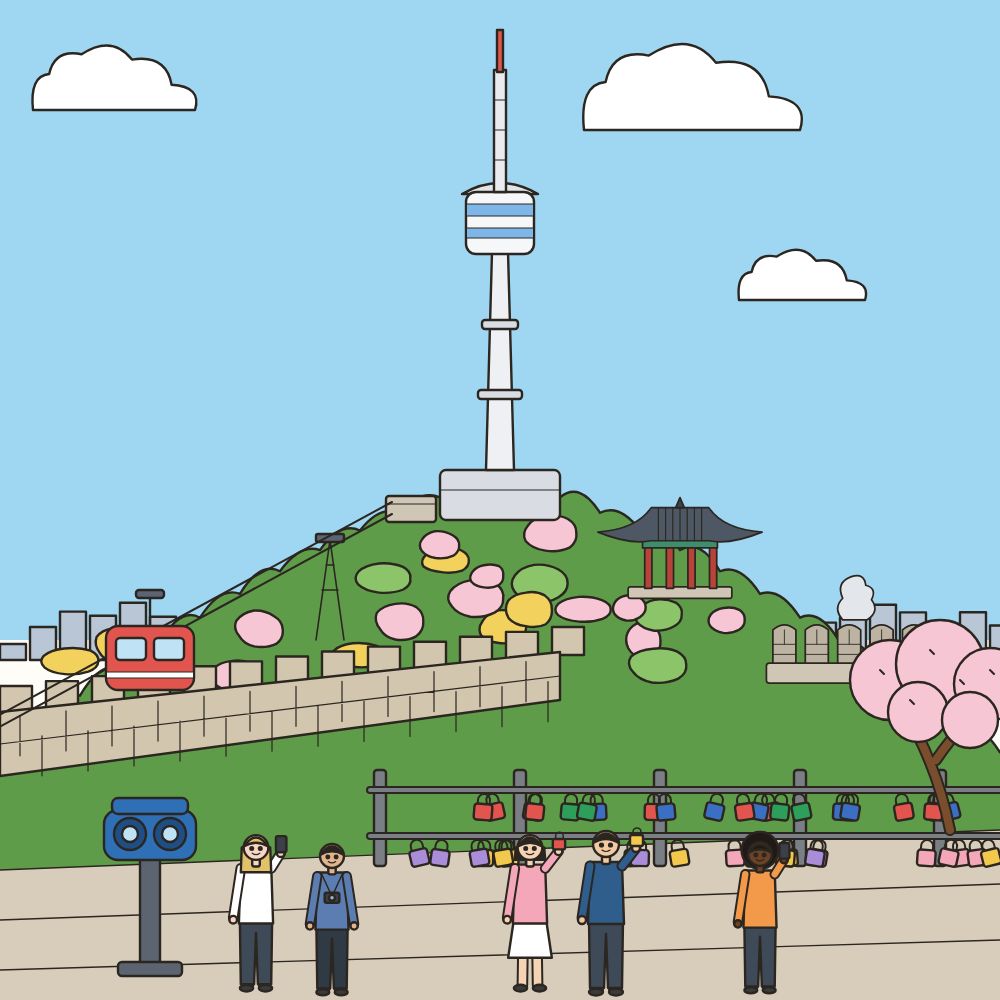
Your first week in Korea: get a SIM at the phone store, open an account and a debit card at the bank, pay at the convenience store and Daiso, order at cafés and restaurants, take taxis and buses, ask for directions and greet your new neighbors. If staff talk too fast, it’s fine to say 한 번만 다시 천천히 말씀해 주세요.
- 통장을 만들고 싶어서요. tongjangeul mandeulgo sipeoseoyo. I’d like to open a bank account.
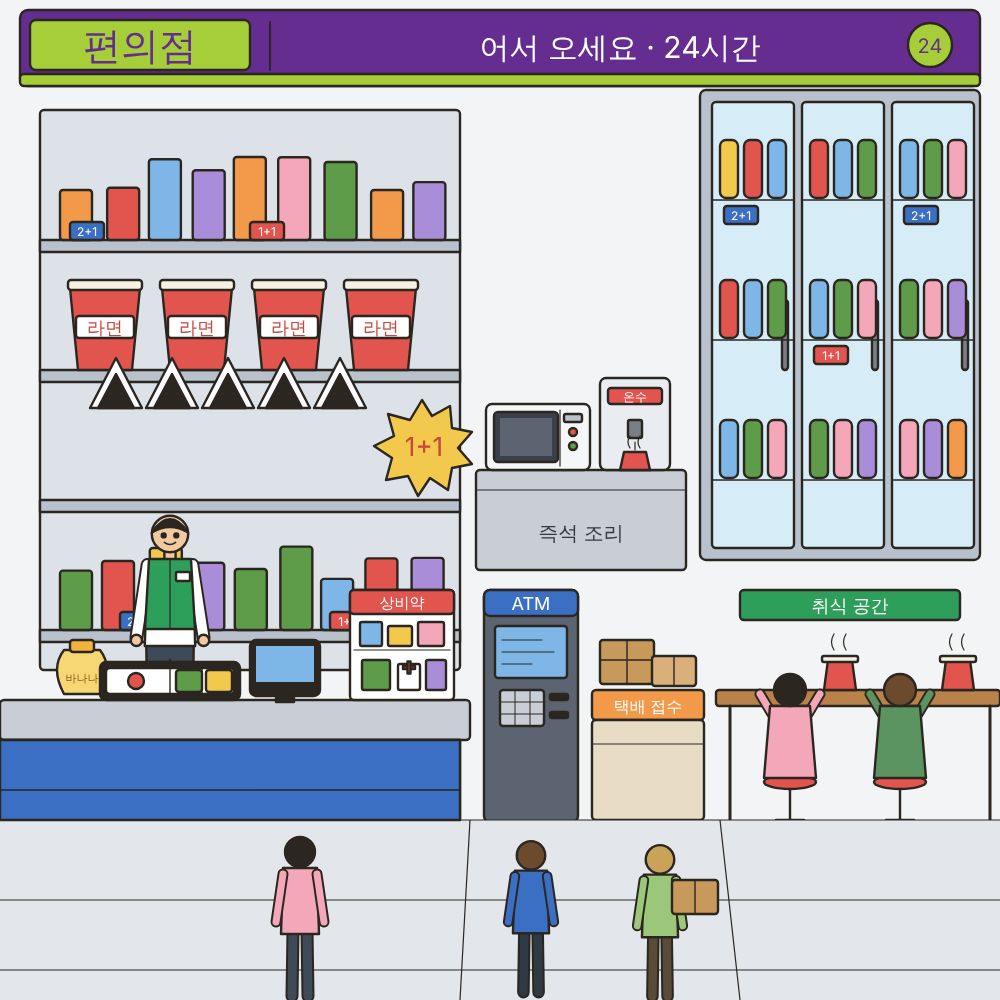
- 교통카드 충전해 주세요. 만 원이요. gyotongkadeu chungjeonhae juseyo. man woniyo. Please top up my transit card — 10,000 won.
- 죄송한데, 한 번만 다시 천천히 말씀해 주세요. joesonghande, han beonman dasi cheoncheonhi malsseumhae juseyo. Sorry, could you say that again, slowly?
Stage 2 · Month 1 (community center, parcels, delivery, post, recycling)
Month one: register your address and get a fixed-date stamp at the community center, visit immigration, send half-price parcels and take the delivery driver’s call, mail a parcel abroad (contents, air or sea, the label), sort your recycling, print at a print café, send money home, give the delivery rider your door code and unit number, and book a clinic appointment by phone. Even when staff use honorifics, don’t add -시- to your own answers (처음이세요 ✗ → 처음이에요).
- 이사해서 전입신고 하러 왔어요. isahaeseo jeonipsingo hareo wasseoyo. I moved, so I’m here to register my new address.
- 네, 반값택배 보내려고요. ne, bangaptaekbae bonaeryeogoyo. Yes, I want to send it by half-price delivery.
- 항공으로 보내 주세요. 얼마나 걸려요? hanggongeuro bonae juseyo. eolmana geollyeoyo? By air, please. How long will it take?
Stage 3 · Month 3 (clinic, dentist, renting, building office, daycare)
Month three is about getting sick, getting things fixed, and buying and selling: describe symptoms and your medicine at the clinic, pharmacy and dentist, look for a flat at the real estate office, deal with the building management office (fees, moving day), talk to daycare and school teachers, and handle the vet, the gym, the public health center, Olive Young, the hair salon, the dry cleaner and a Karrot meetup.
- 어제부터 목이 아프고 열이 나요. eojebuteo mogi apeugo yeori nayo. My throat has hurt since yesterday and I have a fever.
- 안 졸린 약으로 주실 수 있어요? an jollin yageuro jusil su isseoyo? Could I get one that doesn’t make me drowsy?
- 아, 보여요! 지금 그쪽으로 갈게요. a, boyeoyo! jigeum geujjogeuro galgeyo. Oh, I see you! I’m coming over now.
Stage 4 · Month 6 (small talk, plans, team dinners, days off, weddings)
Month six: getting close to coworkers and neighbors. Practise greetings like 밥 먹었어요?, weekend talk, reacting to good and bad news, making plans, refusing softly (좀 어려울 것 같아), apologizing and thanking — plus team dinners, days off and sick leave, apologizing for noise, asking the landlord for repairs, wedding invitations, condolences and housewarmings.
- 네, 먹었어요. 민지 씨는요? ne, meogeosseoyo. minji ssineunyo? Yes, I have. How about you, Minji?
- 미안, 이번 주말은 좀 어려울 것 같아. mian, ibeon jumareun jom eoryeoul geot gata. Sorry, this weekend might be a bit hard for me.
- 감사합니다. 선배님 덕분이에요. gamsahamnida. seonbaenim deokbunieyo. Thank you. It’s all thanks to you.
Stage 5 · Year 1 (read long chats, group chats & calls)
Read whole KakaoTalk chats and group chats (parents, company notices), building office notices, calls with a delivery driver and face-to-face conversations, then answer who, when, where and what. Plans often change halfway through, so skipping the last line is the easiest way to get it wrong.
- 좋아! 그럼 6시 반에 영화관 앞에서 보자. joa! geureom yeoseotsi bane yeonghwagwan apeseo boja. Sounds good! Let’s meet in front of the cinema at 6:30, then.
- 고마워! 도착하면 전화할게. gomawo! dochakhamyeon jeonhwahalge. Thanks! I’ll call you when I get there.
- 그럼 3시로 해 주세요. geureom sesiro hae juseyo. Then 3 o’clock, please.
After Step 9 you can greet your neighbors, handle the clinic and bank in Korean, make small talk with coworkers, and make or politely turn down plans. Step 10 moves on to casual chats with friends, with trendy slang and KakaoTalk abbreviations.
Frequently asked questions
What Korean phrases do I need to live in Korea?
Start with the short greetings and replies you use every day. 감사합니다 (thank you), 죄송합니다 (I’m sorry), 수고하세요 for people who are working, and -아/어 주세요 for requests (e.g. 경비실에 맡겨 주세요, “please leave it at the guard’s office”) cover most moments with neighbors, couriers and shops. Add a symptom sentence like 어제부터 목이 아프고 열이 나요 and you can get through a clinic visit too.
What does 밥 먹었어요 mean in Korean?
It literally means “Have you eaten?”, but it’s usually just a greeting, like “How are you?”. A short answer that bounces the question back sounds natural: 네, 먹었어요. 민지 씨는요? (“Yes, I have. How about you, Minji?”). You don’t need to say what you ate.
When do you say 수고하세요 in Korean?
Say it when you leave someone who is working — a delivery driver, shop staff or the building guard — as in 네, 감사합니다. 수고하세요. It can sound a little off to people above you, so with seniors or your boss, 감사합니다 or 좋은 하루 보내세요 (“have a nice day”) is safer.
How do I tell a doctor I’m sick in Korean?
Say when it started and what hurts: 어제부터 목이 아프고 열이 나요 (“My throat has hurt since yesterday and I have a fever”) is a good model. At reception, if you’re asked 처음 오셨어요? (“Is this your first visit?”), answer 네, 처음이에요. 여기 외국인등록증이요 and hand over your ID. At the pharmacy, listen for 하루 세 번, 식후 30분에 드세요 — three times a day, 30 minutes after meals.
Is “let’s eat sometime” (언제 밥 한번 먹어요) a real invitation in Korea?
Usually not — it’s a warm way of saying “see you around”, not a plan with a date. Replying 네, 좋아요! 연락할게요 (“Sure, sounds good! I’ll text you”) is enough; if you really want to meet, ask about a day, like 이번 주말에 시간 돼요? (“Are you free this weekend?”). The long-conversation stage of Step 9 includes exactly this kind of exchange, so you can practise it.