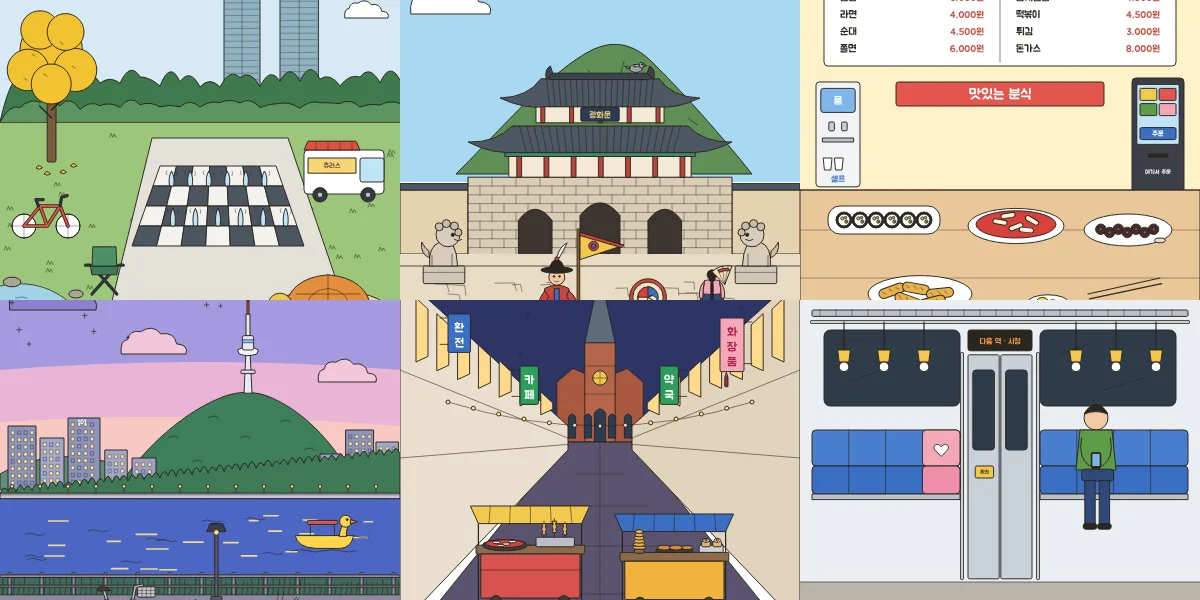
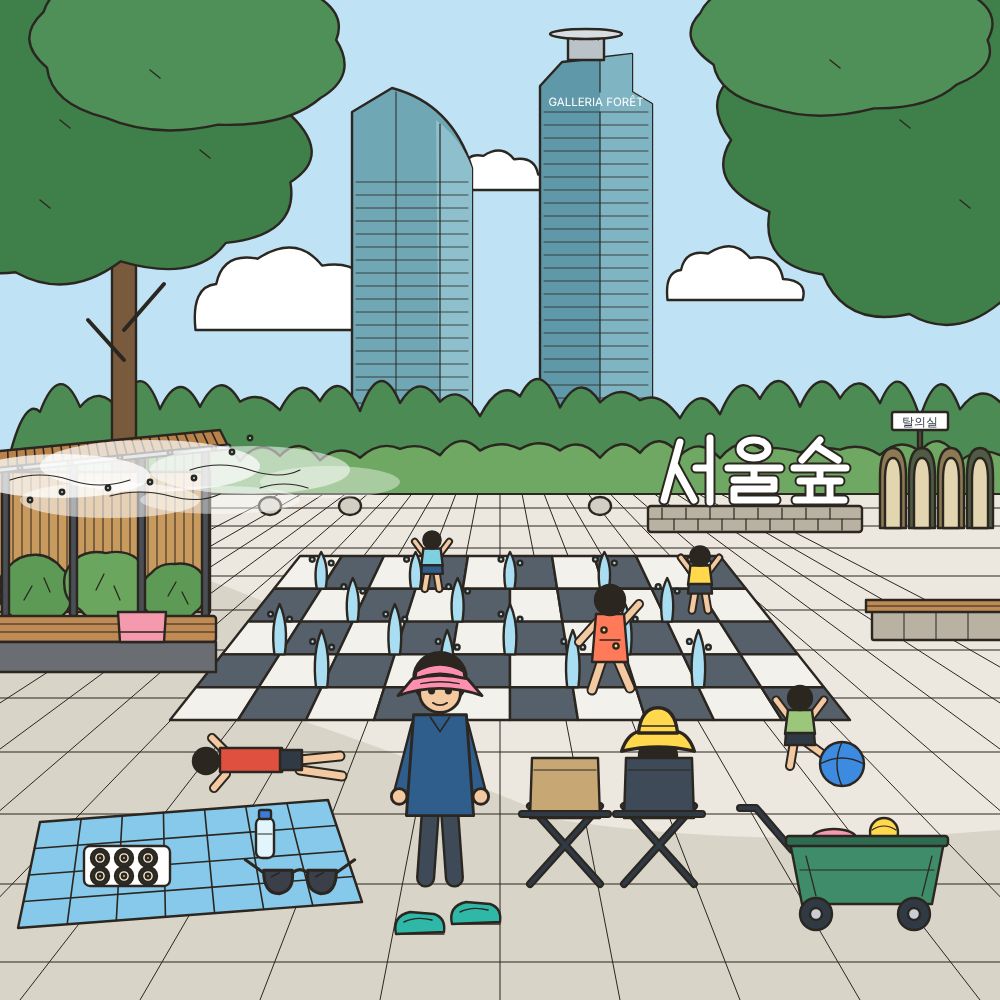
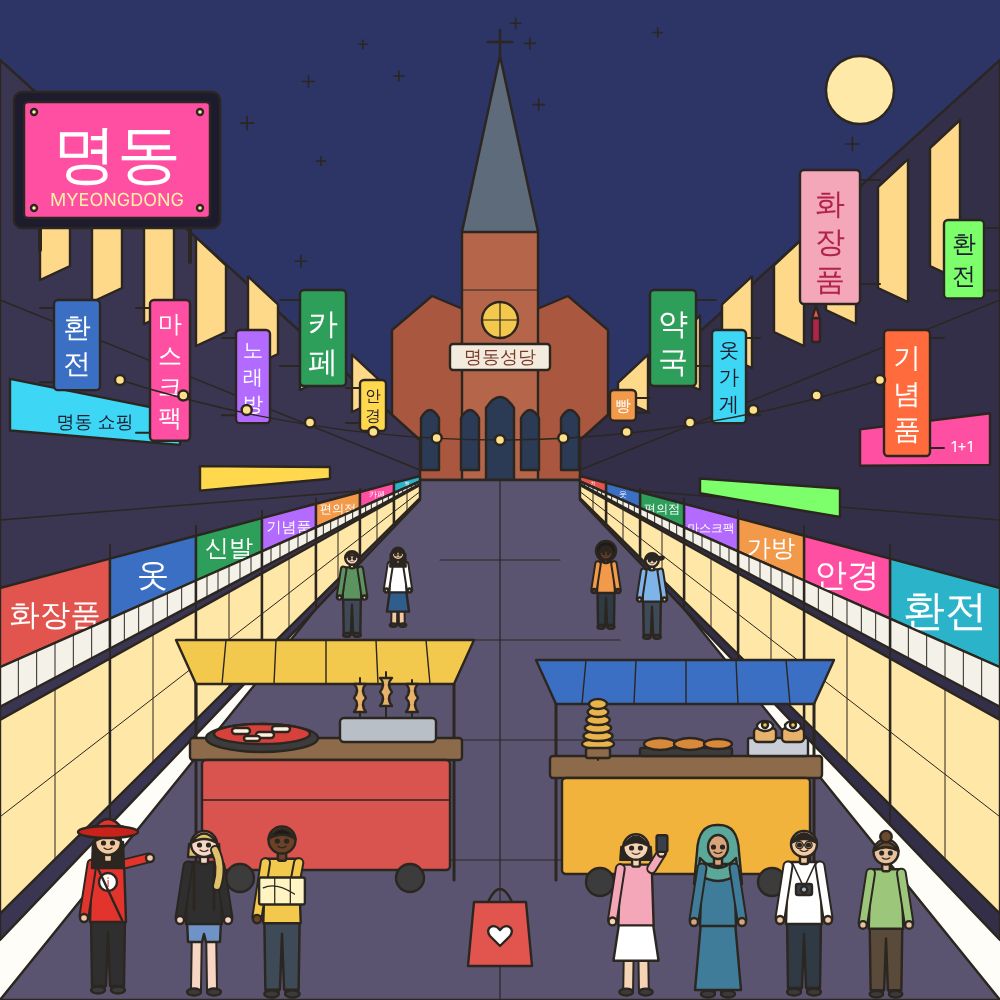
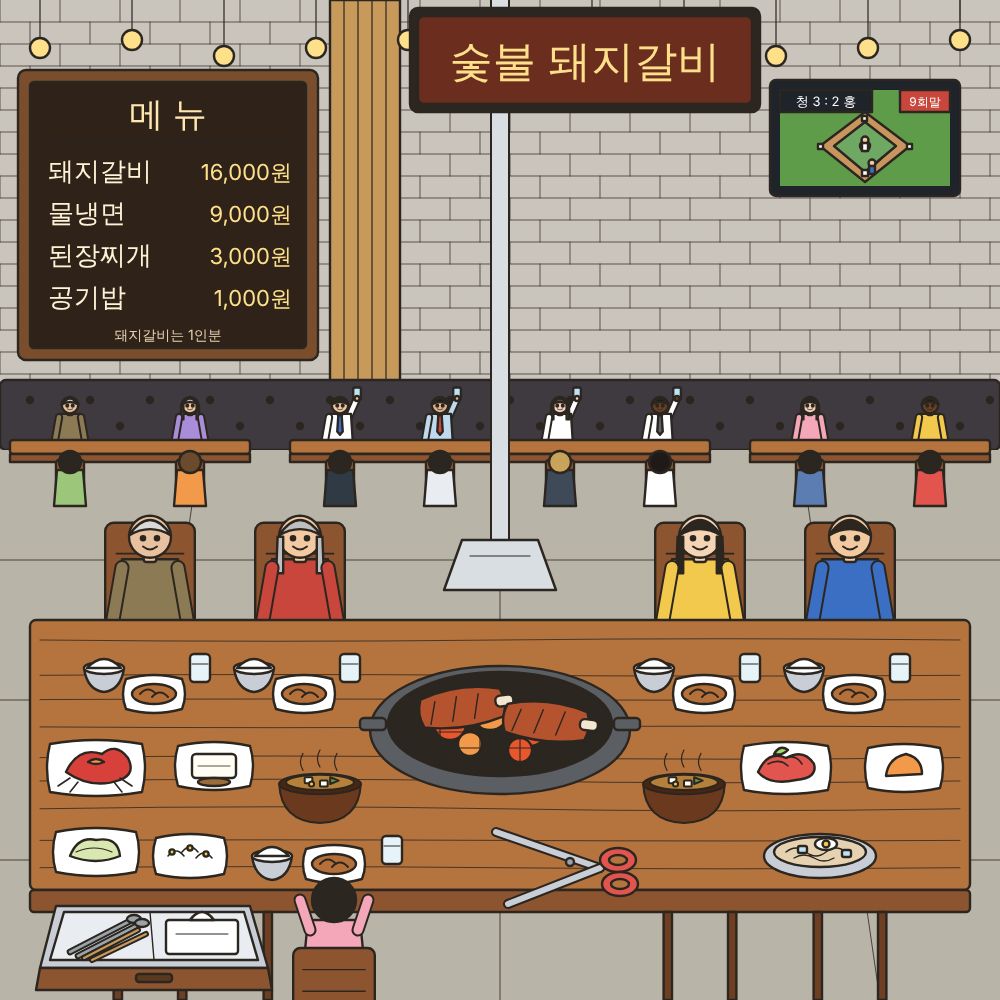
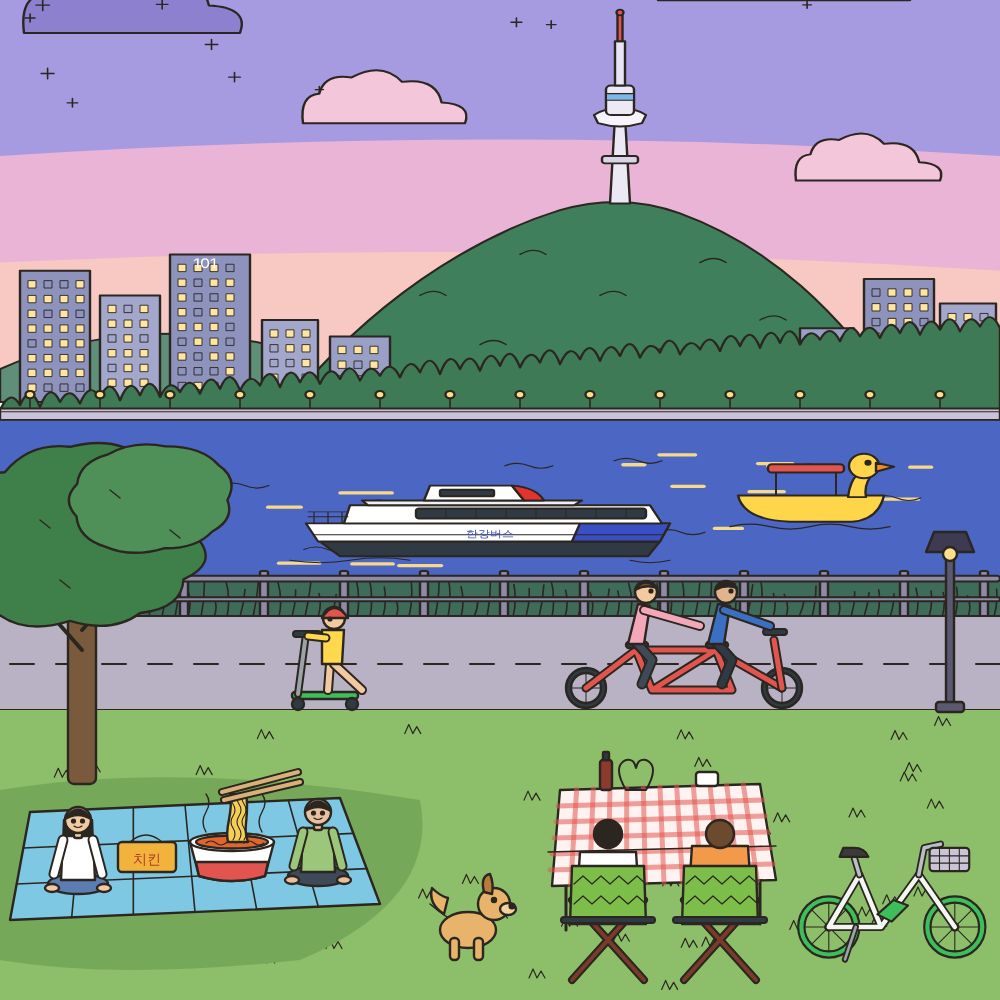
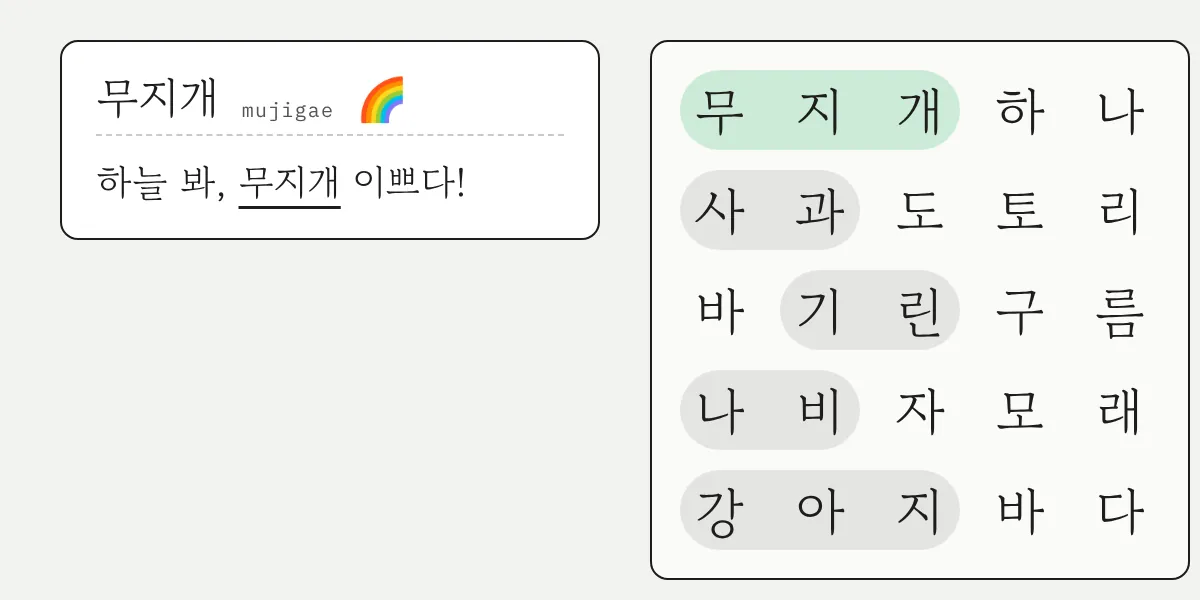
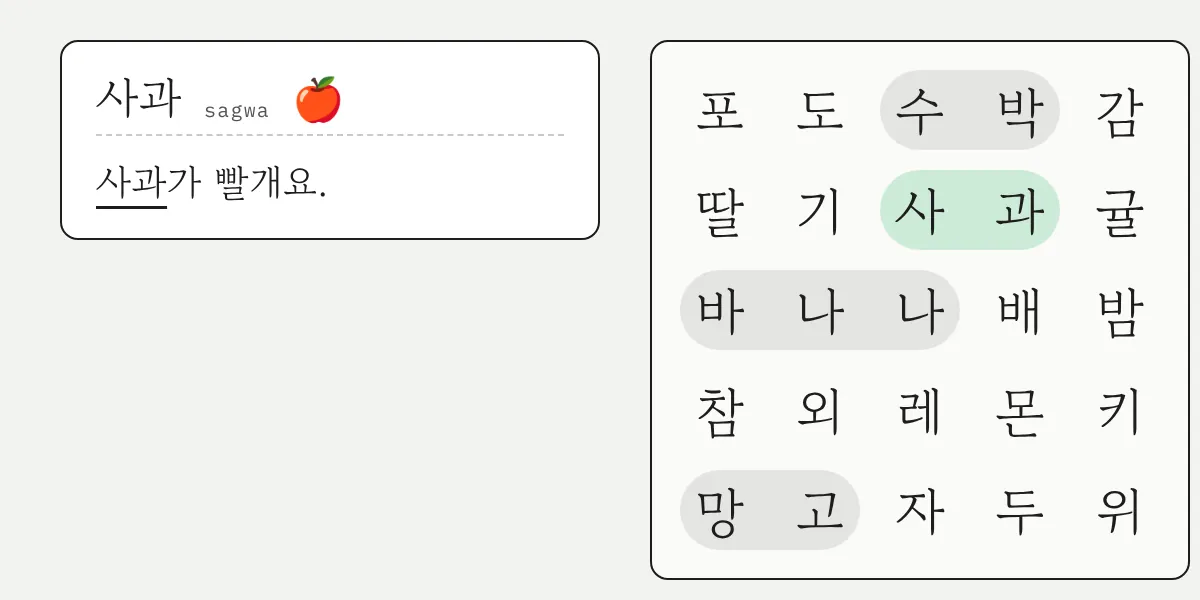
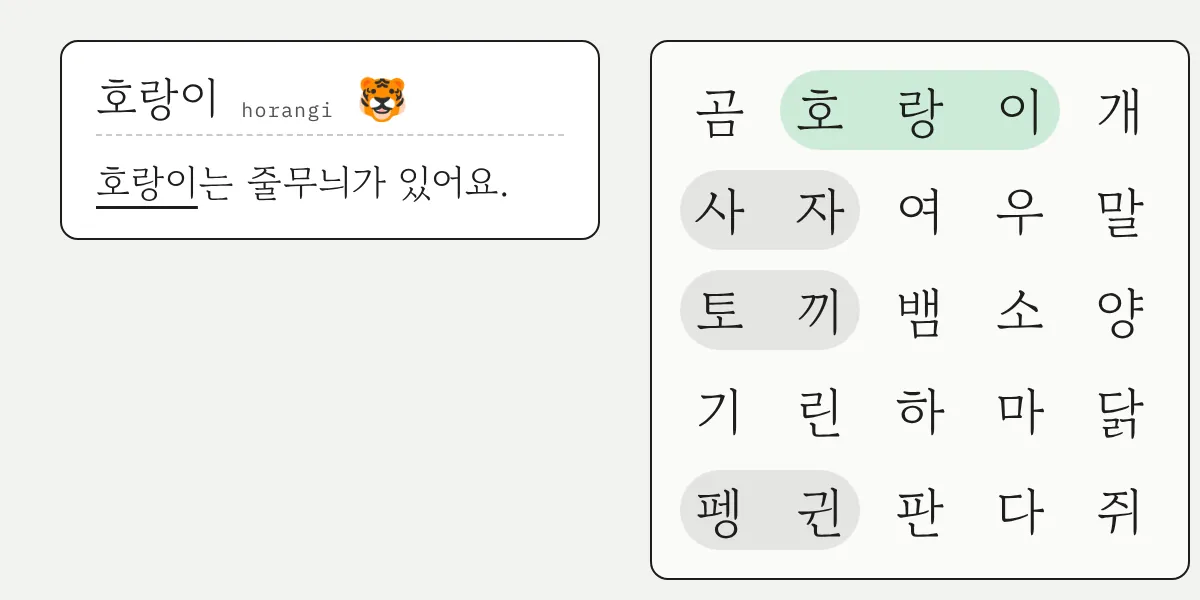
Understand and answer real Korean at the airport, on the subway, in restaurants and shops
How to use
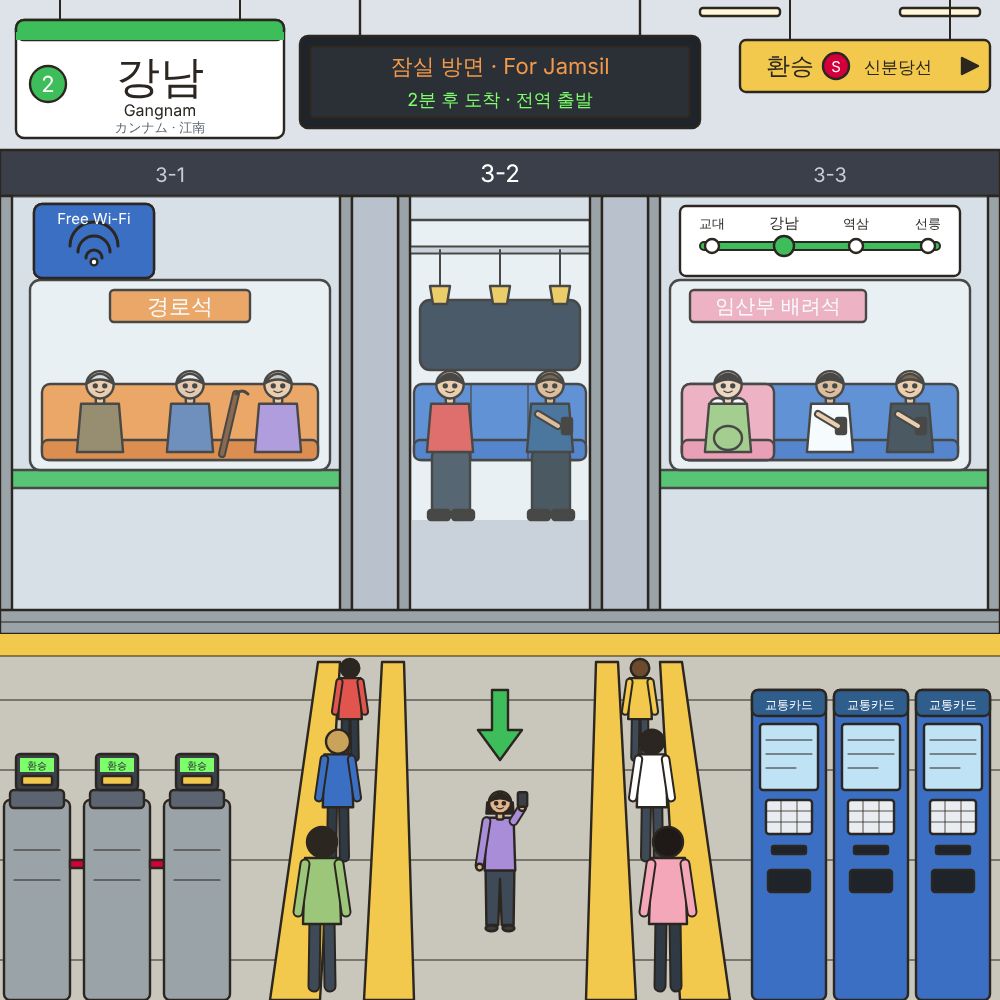
At the top of the screen you see a place sign — 입국 심사 (immigration), 지하철 2호선 (subway Line 2), 약국 (pharmacy) — and what a staff member, passer-by or announcement says, in text and audio. Below it, the 💭 picture shows your situation (taking it to go, less spicy, two people at 7…). Pick the reply that fits and you get audio, romanization, a translation, a grammar note and a Seoul travel tip.
Stage 1 is the airport and hotel (immigration, currency exchange, check-in, storing bags, Wi-Fi), stage 2 is getting around (subway announcements, transfers, taxis, buses, fast directions), and stage 3 is ordering (an iced Americano, to go, the pager buzzer, less spicy, self-service water, paying).
Stage 4 is booking and paying (reserving a table by phone, giving your name and number, changing or cancelling, two nights at a guesthouse, 카드 돼요?, tax refunds, exchanges), and stage 5 is getting help (lost, pharmacy and clinic, lost property, asking for a photo, restrooms, 119). Staff and announcements speak politely with -시- and 합니다 style; you answer in polite 해요 style.
Every option is natural Korean you could hear in that place, but some give a different plan or ask for something else — so you have to understand what was said and your 💭 situation to choose. Each stage draws 10 of 15 questions at random, and each mistake costs a heart. Lose all 3 hearts and you start again; finish and you earn one star per heart left (up to 3). One star unlocks the next stage.
Korean Phrases for Travel: What You Learn in Step 8
The Travel Talk Mission is Step 8 of Learn Korean, a game for anyone planning a trip to Korea that trains you to understand and answer the Korean you’ll actually hear at the airport, on the subway and in restaurants and shops. Across five stages — airport and hotel, getting around, ordering, booking and paying, and asking for help — you learn the essential travel phrases with audio and romanization. It’s free, with no sign-up.
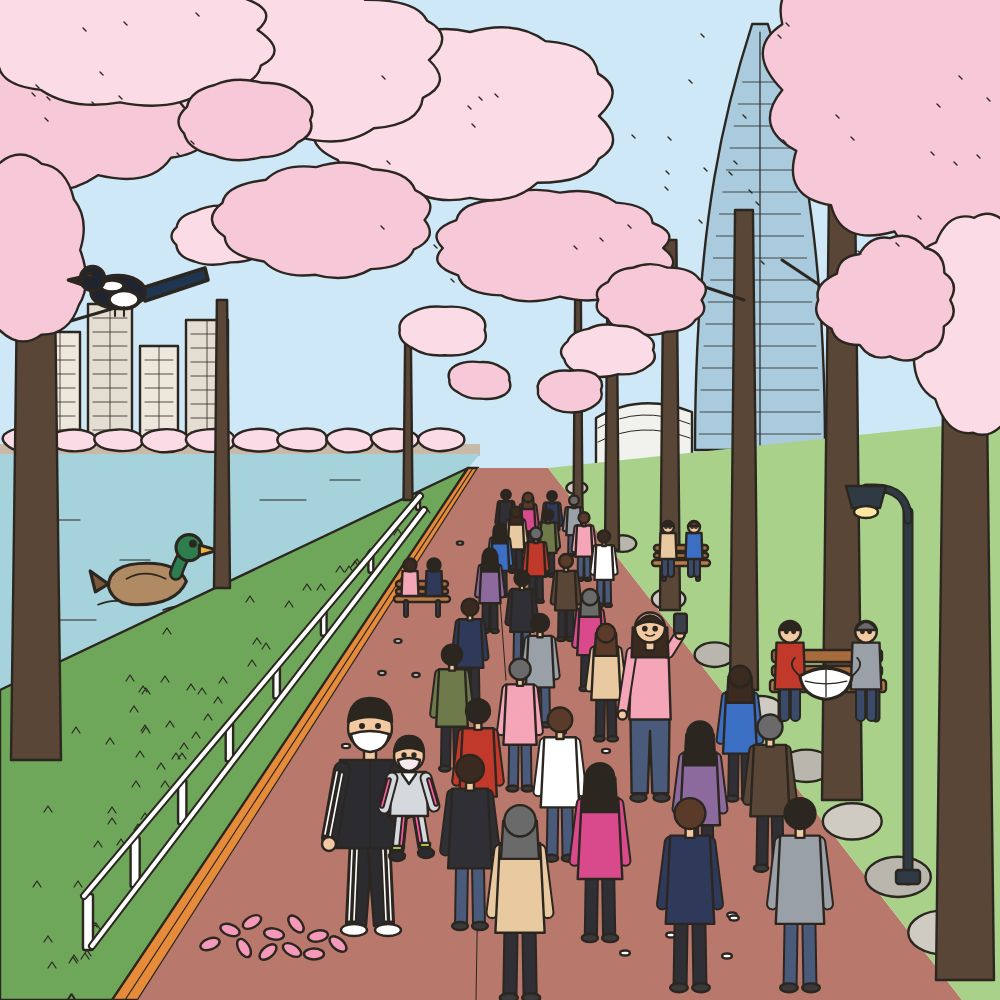
Stage 1 · Airport & hotel
Answer immigration questions about why you’re visiting, how long and where you’re staying, then check in and leave your bags at the hotel. Staff ask politely with -시- (며칠 동안 계실 거예요?), but when you talk about yourself you drop it: 있을 거예요, not 계실 거예요.
- 여행하러 왔어요. yeohaenghareo wasseoyo. I’m here to travel.
- 체크인하려고요. 예약했어요. chekeuinharyeogoyo. yeyakaesseoyo. I’d like to check in. I have a reservation.
- 그럼 짐 좀 맡겨도 될까요? geureom jim jom matgyeodo doelkkayo? Then could I leave my luggage here?
Stage 2 · Getting around
Catch subway announcements like 이번 역은 시청역입니다. 내리실 문은 오른쪽입니다 (“This stop is City Hall. Doors open on the right”), and handle transfers, taxis, buses and directions. In a taxi, say ○○으로 가 주세요 — 모셔 주세요 is a classic mistake.
- 오른쪽 문으로 내리면 되겠네요. oreunjjok muneuro naerimyeon doegenneyo. So I get off through the doors on the right.
- 명동역으로 가 주세요. myeongdongyeogeuro ga juseyo. To Myeongdong Station, please.
- 네, 여기서 세워 주세요. ne, yeogiseo sewo juseyo. Yes, please stop here.
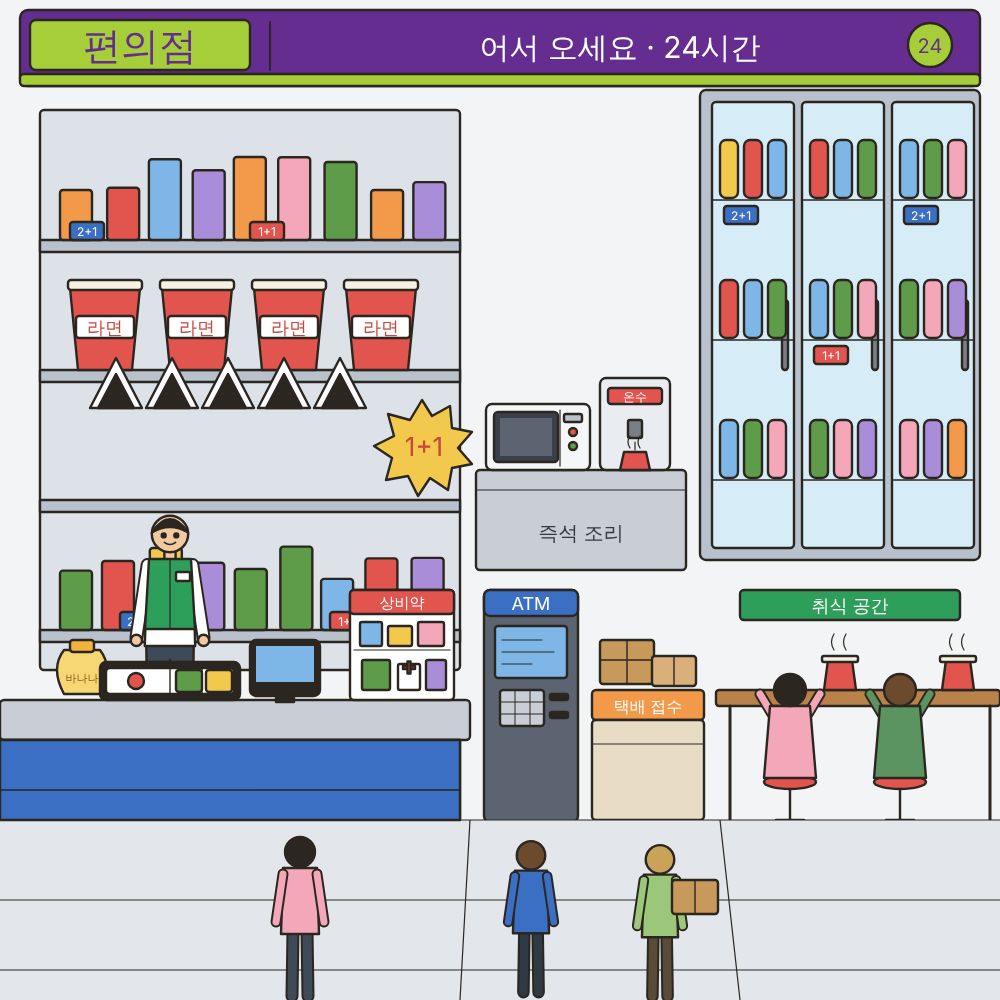
Stage 3 · Ordering food & drinks
Order at cafés and restaurants, pick your spice level and call staff over for more water or side dishes. Counting uses native numbers — 한 잔 (one cup), not 일 잔 — and your group is 두 명, not the honorific 두 분.
- 아이스 아메리카노 한 잔 주세요. aiseu amerikano han jan juseyo. One iced Americano, please.
- 그럼 덜 맵게 해 주세요. geureom deol maepge hae juseyo. Then make it less spicy, please.
- 저기요! 여기 물 좀 주세요. jeogiyo! yeogi mul jom juseyo. Excuse me! Could we get some water here?
Stage 4 · Booking & paying
Browse and pay in shops, and book, change or cancel restaurant and guesthouse reservations by phone. A common slip is making objects honorific — it’s 카드 돼요? (Do you take cards?), not 카드 되세요?
- 토요일 저녁 7시에 두 명 예약하고 싶어요. toyoil jeonyeok ilgop sie du myeong yeyakago sipeoyo. I’d like to book a table for two at 7 p.m. on Saturday.
- 혹시 카드 돼요? hoksi kadeu dwaeyo? Do you take cards, by any chance?
- 아니요, 그냥 구경하는 거예요. aniyo, geunyang gugyeonghaneun geoyeyo. No, I’m just looking.
Stage 5 · Asking for help
Get help when you’re lost, explain symptoms at a pharmacy or clinic, and report things left on the subway or in a taxi. To ask a favor, use -아 주실 수 있어요?; -아 드릴 수 있어요? means you’re offering to do it for them.
- 혹시 화장실이 어디에 있어요? hoksi hwajangsiri eodie isseoyo? Excuse me, where’s the restroom?
- 머리가 아프고 열이 나요. meoriga apeugo yeori nayo. I have a headache and a fever.
- 지하철에 휴대폰을 두고 내렸어요. jihacheore hyudaeponeul dugo naeryeosseoyo. I left my phone on the subway.
After Step 8 you can follow and answer the Korean you’ll hear on a Seoul trip, from immigration to transport, meals, shopping and emergencies. Next up is Step 9, Everyday talk, where you practice the conversations Koreans have every day.
Frequently asked questions
What basic Korean phrases should I learn before traveling to Korea?
After 안녕하세요 (annyeonghaseyo, hello) and 감사합니다 (gamsahamnida, thank you), the most useful ones are short requests and questions: ○○ 주세요 (juseyo, “… please”), 혹시 카드 돼요? (Do you take cards?) and 화장실이 어디에 있어요? (Where’s the restroom?). Call restaurant staff with 저기요! (jeogiyo), and in a taxi say 명동역으로 가 주세요 for your destination and 여기서 세워 주세요 to stop.
Do I need to speak Korean to travel in Korea?
No — Seoul’s subway signs and announcements are usually in English too, so you can get around without Korean. Small local restaurants, markets and taxis often use only Korean, though, so a few lines like 덜 맵게 해 주세요 (less spicy, please) and 따로따로 해 주세요 (separate bills, please) make things much easier. If you get stuck, the 1330 Korea Travel Hotline helps in several languages.
Do you tip in Korea?
No, tipping isn’t part of the culture in Korean restaurants and cafés. You usually pay at the counter on your way out — just say 계산할게요 (gyesanhalgeyo, I’d like to pay). To split the bill, say 따로따로 해 주세요.
Do I have to use formal Korean as a tourist?
The polite 해요 style (sentences ending in -아요/어요) is all you need with staff and strangers. Casual speech like 물 줘 sounds rude, while adding the honorific -시- to your own actions (계산하실게요, 5일 동안 계실 거예요) is simply wrong. Short 해요-style answers like 네, 여기 있어요 (Yes, here it is) and 카드로 할게요 (By card, please) sound just right.
What is the emergency number in Korea?
Dial 119 for an ambulance or fire and 112 for the police. If you can’t call yourself, ask someone nearby: 119에 전화 좀 해 주세요 (Please call 119). For interpretation or travel help, call 1330.