The worksite Korean this game builds
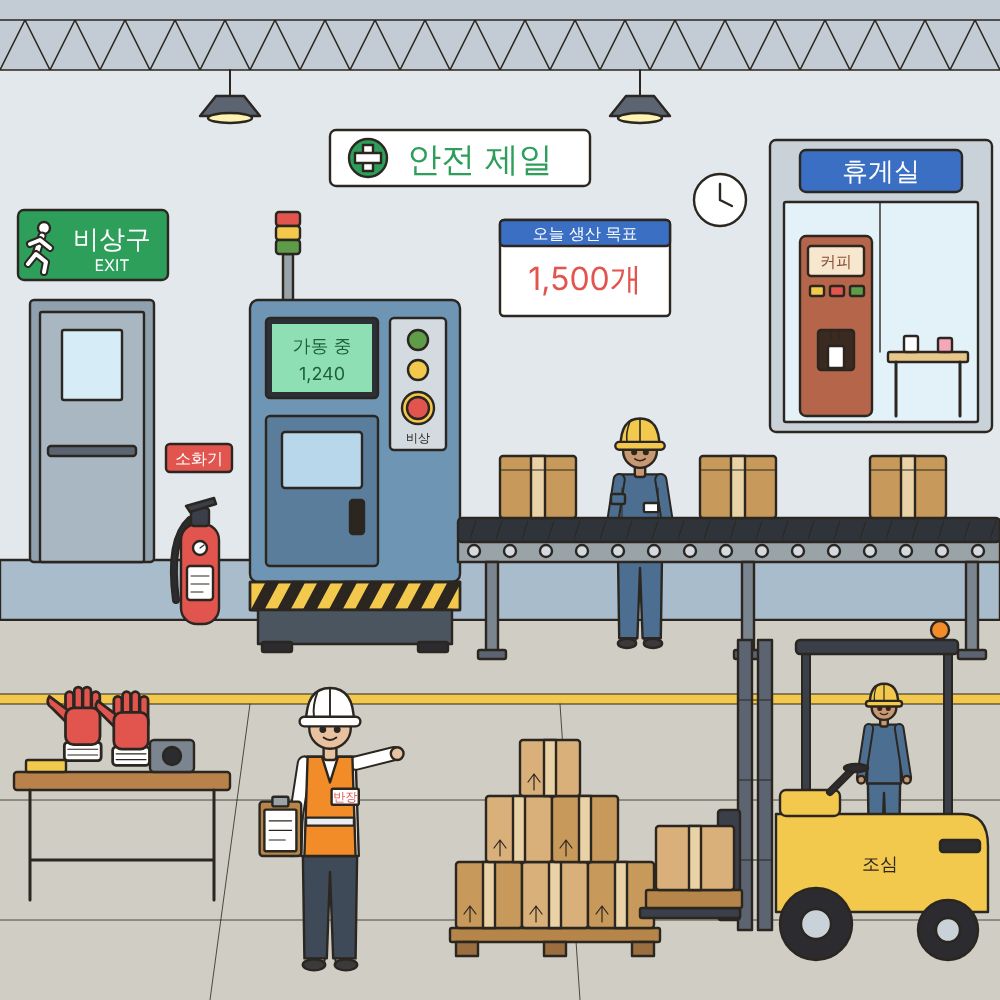
Korean factories, farms and construction sites have safety signs on walls, machines and doors. You can often guess a sign from its picture, but when a team leader says “방진마스크 쓰세요,” you need the Korean name to know which mask he means. This game covers 47 items, Korean industrial safety signs plus notice words such as 위험 (danger) and 작업 중 (work in progress), spread over 5 stages. By the end, you should be able to tell a sign’s type from its color and shape, read and say its Korean name, and match a short spoken instruction on site to the right sign.
Sign types by color and shape
A red circle with a slash is a prohibition sign (금지표지). A yellow triangle is a warning sign (경고표지), a blue circle is a mandatory sign (지시표지), and green means an information sign (안내표지). A red-bordered diamond marks a dangerous chemical, and it also counts as a warning sign. Knowing the type tells you right away whether an unfamiliar sign means “don’t” or “you must.”
How sign names are built
Most names are “thing + 금지 / 경고 / 착용.” 출입금지 (no entry) and 화기금지 (no open flames) are bans; 고온경고 (hot surface) and 낙하물경고 (falling objects) are warnings; 안전모착용 (wear a hard hat) and 귀마개착용 (wear ear protection) tell you what to put on. The last word alone usually gives away the type.
Names that differ by one syllable
방독마스크 is a gas mask and 방진마스크 is a dust mask. 보안경 covers your eyes and 보안면 your whole face. 좌측비상구 and 우측비상구 are the left and right emergency exits. Stage 5 puts these look-alikes side by side.
What people actually say on site
Stage 4 has 30 lines from a team leader (반장님), a coworker, the boss and a safety manager. You hear “크레인이 짐을 들고 있어요. 그 밑으로 지나가지 마세요” (the crane is lifting a load, don’t walk under it) and pick the hanging-load warning. It links sign names to the way people really give instructions.
Notice words that aren’t official signs
위험, 주의, 소화기, 비상벨, 미끄럼 주의, 머리 조심, 정리정돈 and 작업 중 are not part of the four official sign types, but you see them written all over Korean workplaces. Stages 3 and 5 ask what you should do when you see them.