The Korean you pick up from this test
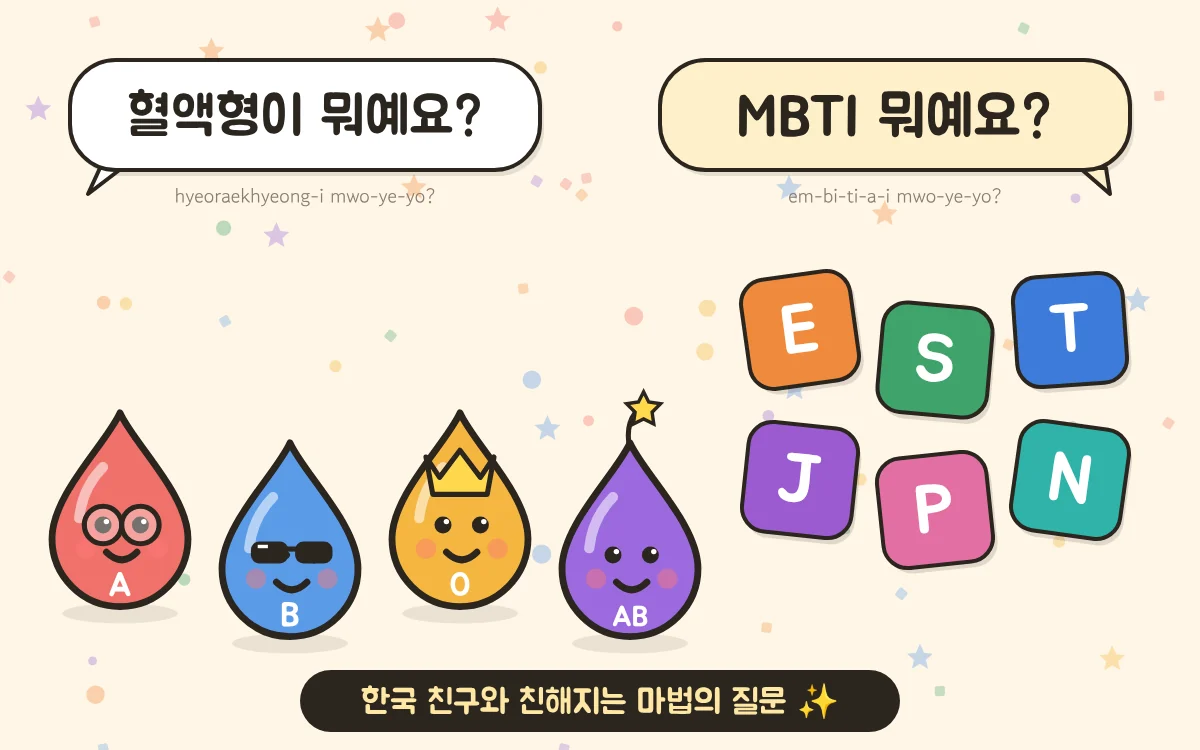
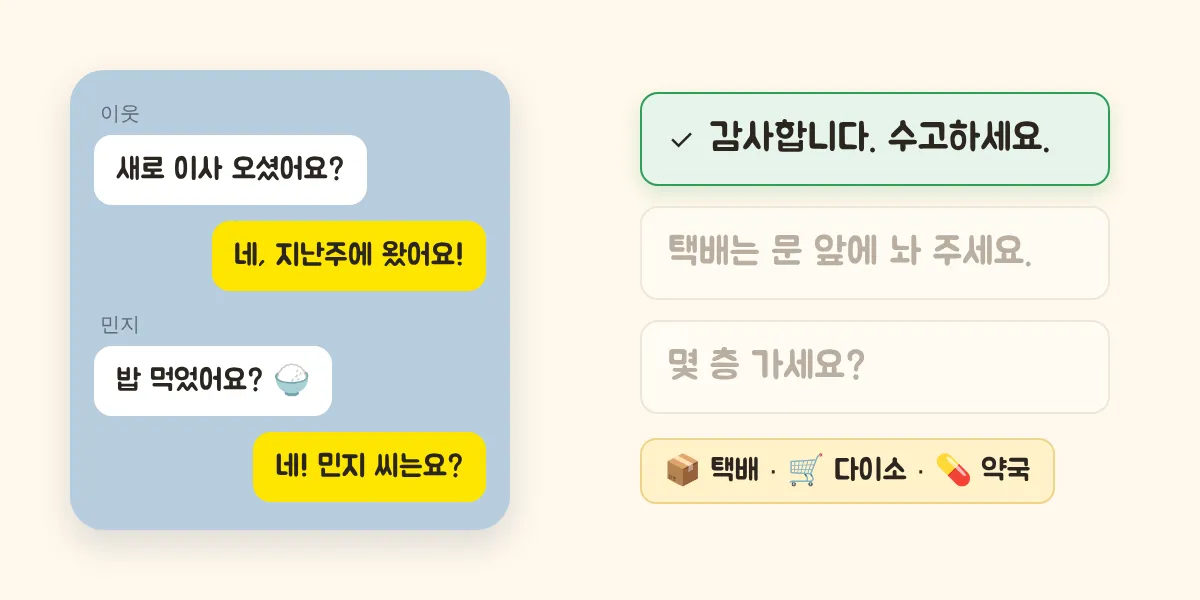
When you meet new people in Korea, you will often be asked “MBTI 뭐예요?” (What’s your MBTI?). This is a short, unofficial test made for fun, not a tool that measures personality accurately. What it does is get you ready to answer that question in Korean. After 12 questions you have a type, and the result screen lets you hear how to read it the Korean way, how to say “저는 ○○○○예요” (I’m …), and how to ask about blood type, which often works better with older Koreans.
Asking and answering “MBTI 뭐예요?”
MBTI is read 엠비티아이 (em-bi-ti-a-i). 뭐예요 is the short form of 무엇이에요, “what is it,” and it is polite enough for people you have just met. One sentence is enough to answer: 저는 ○○○○예요.
Saying your type the Korean way
Koreans read each letter with its Korean name: E is 이, I is 아이, S is 에스, N is 엔, T is 티, F is 에프, J is 제이 and P is 피. So ESTJ becomes 이에스티제이. If you read it the English way, E and I are easy to mix up, so watch those two.
Choosing 예요 or 이에요
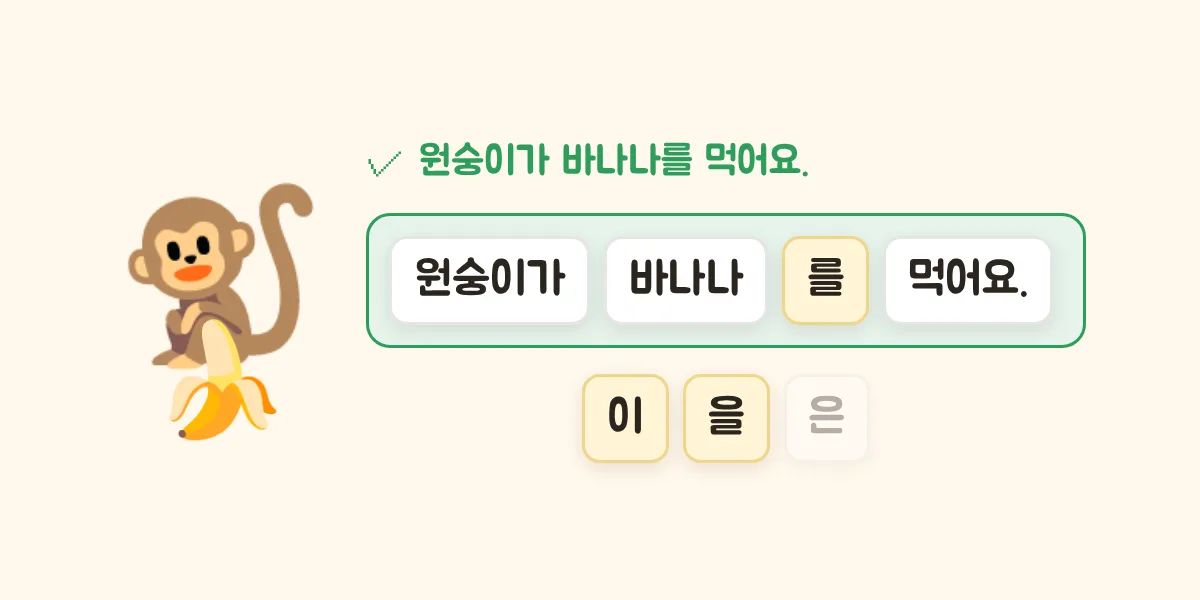
Use 예요 after a word ending in a vowel and 이에요 after a word ending in a consonant. Every type ends in 제이 or 피, a vowel sound, so you say 저는 INFP예요. Blood types end in 형, which has a final consonant, so it is 저는 A형이에요.
Blood-type small talk
Ask 혈액형이 뭐예요? (What’s your blood type?) and answer like 저는 O형이에요. A is read 에이형, B is 비형, O is 오형 and AB is 에이비형. If you don’t know yours, say 제 혈액형은 잘 몰라요 (I’m not sure of my blood type). Pick a blood type on the result screen and the sentence changes to match.
Two casual lines for friends
우리 잘 맞겠다! means “we’d get along great!” 너 T야? (“Are you a T?”) is a joke for when a friend sounds too logical. Both are casual speech (반말), so keep them for close friends.