What Korean will I hear most in a factory?
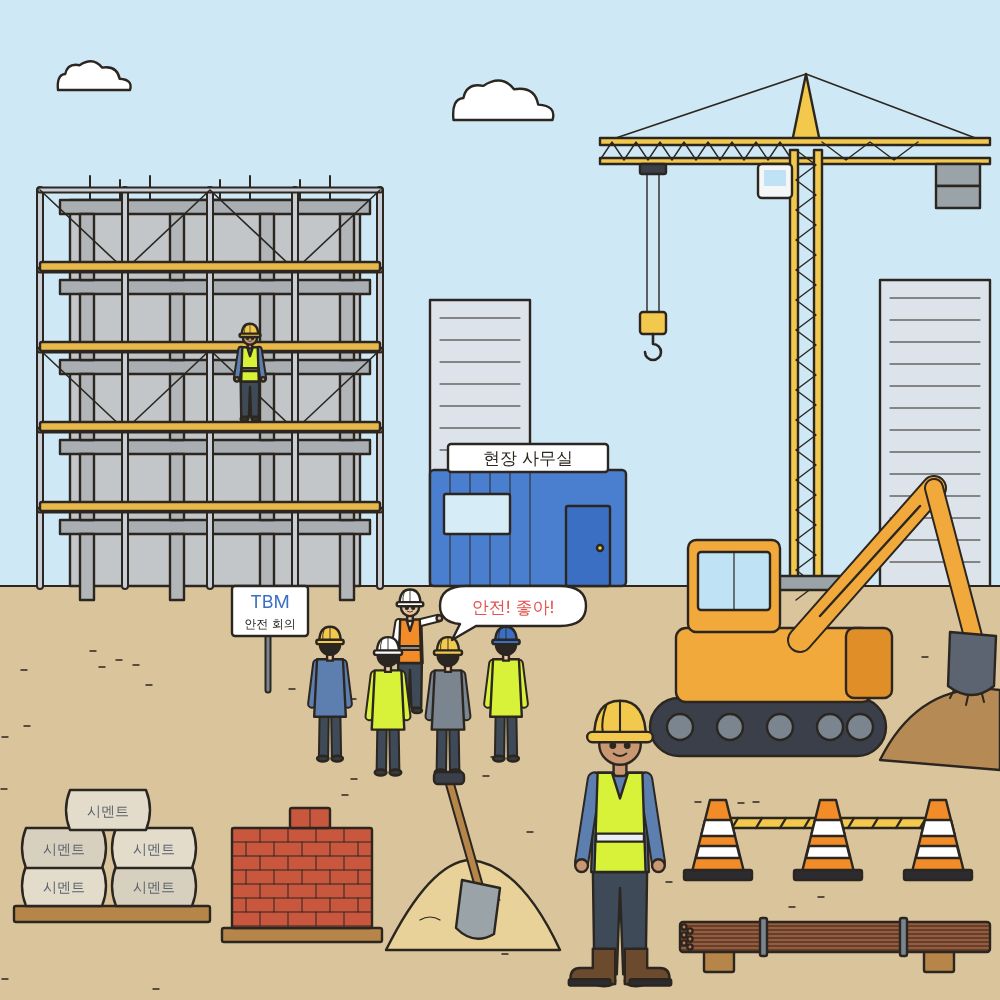
Short phrases like “안전모 쓰세요” (put on your hard hat), “이거 저쪽으로 옮겨 주세요” (please move this over there), “조심하세요!” (careful!), “잠깐만요!” (wait a moment!) and “다 했어요?” (are you done?). Practice them out loud along with the words in this scene.
What if I don’t understand the team leader?
Don’t guess and keep working. Say “다시 한번 말씀해 주세요” (please say it again), “천천히 말씀해 주세요” (please speak slowly) or “보여 주세요” (please show me). Asking is much safer than making a mistake.
What does “안전 제일” mean, and which rules matter most?
It means “safety first.” Always wear your protective gear, never reach into a running machine or conveyor, and on your first day find the emergency stop button, the fire extinguisher and the emergency exit.
What should I do if I get hurt at work?
Tell your team leader or manager right away, even for a small cut, and get treatment. Work injuries can be covered by industrial accident insurance (산재보험), including for foreign workers — ask your company or the Korea Workers’ Compensation & Welfare Service (근로복지공단).
How do I ask for the toilet or a break?
Ask “화장실 다녀와도 돼요?” (may I go to the toilet?) or “잠깐 쉬어도 될까요?” (may I rest a moment?). Break times are set by each company; you usually rest in the break room (휴게실).
Which factory words come up in EPS-TOPIK?
Words like 기계 (machine), 공구 (tools), 컨베이어 (conveyor), 지게차 (forklift), 박스 (box), 포장 (packing), 조립 (assembly), 불량 (defect), 야간 근무 (night shift) and 잔업 (overtime) are common. Find them in this scene and review them in your word book.
Is Vibe Lab official EPS-TOPIK material?
No. Vibe Lab is practice and study help, not affiliated with HRD Korea. Check exam dates and how to apply on the official sites (epstopik.hrdkorea.or.kr, eps.go.kr) and with the sending agency in your country.