National Museum of Korea With Kids: A Free Rainy Day in Seoul (Children's Museum Booking, Strollers, Getting There)
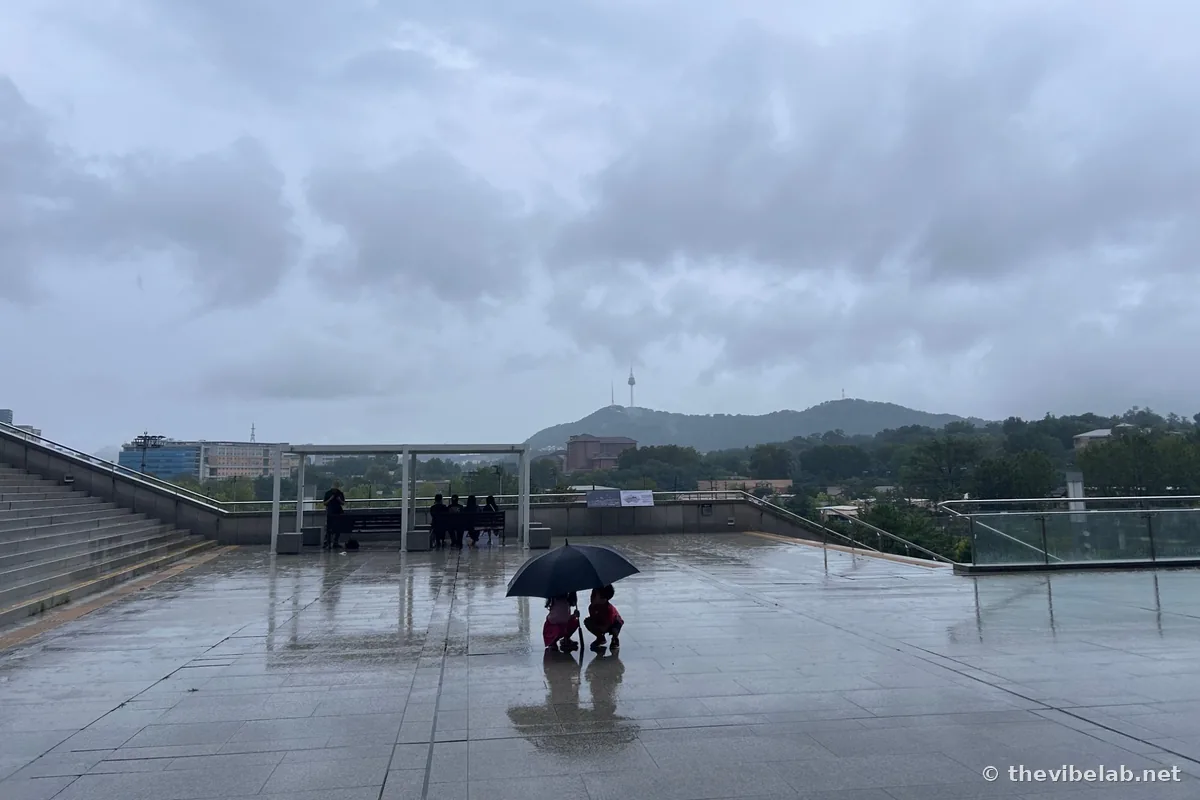
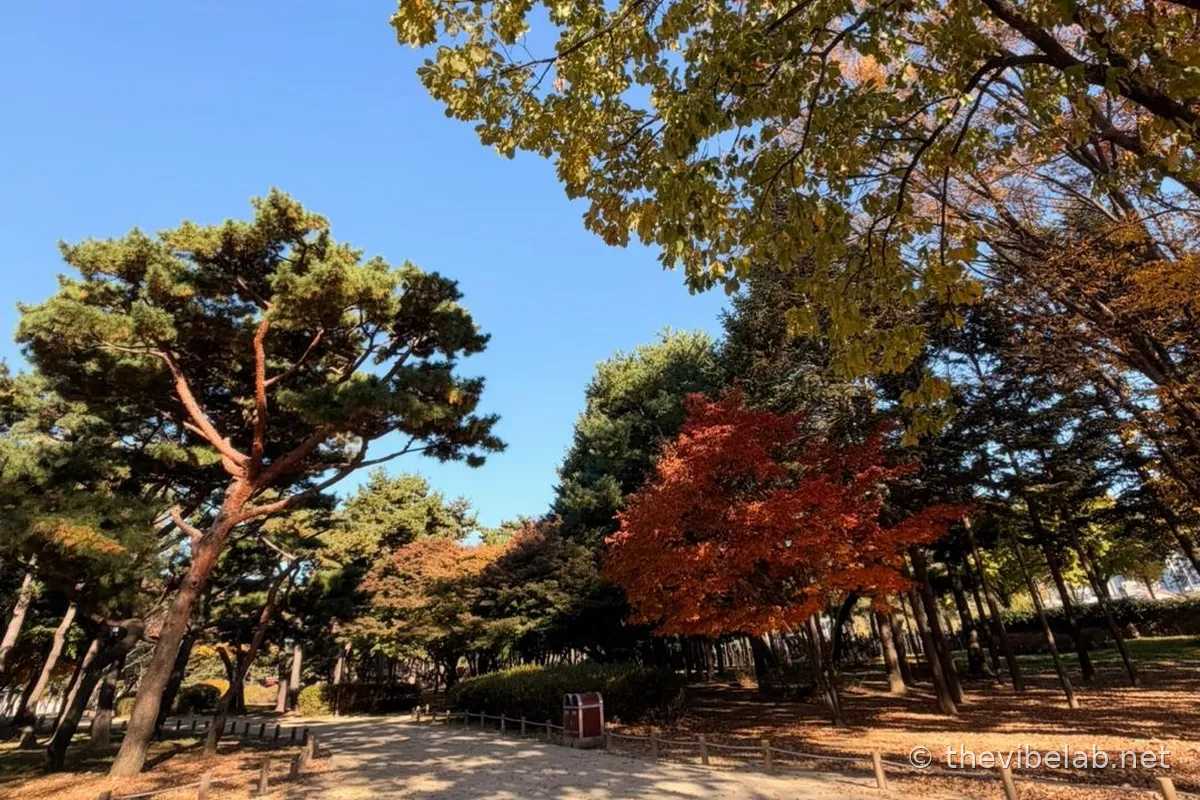
We’ve been to the National Museum of Korea (국립중앙박물관) in Yongsan, Seoul, twice. Once was the four of us on a rainy summer day, and the other time was in autumn with the grandparents.
What surprised us most this time was the number of international visitors. There were far more of them than when we’d come before.
What is the National Museum of Korea?
It’s the biggest museum in Korea, where you can see the country’s history and culture all in one place. Running down the middle of the first floor of the Permanent Exhibition Hall is a Central Hall with a long glass ceiling, with the entrances to galleries like Prehistory and Ancient History on either side. At the end of the hall, the museum’s signature Ten-story Stone Pagoda from Gyeongcheonsa Temple Site (경천사지 십층석탑) towers under the glass ceiling. During the day, sunlight pours in through the glass and the hall is bright.
The permanent exhibitions and the Children’s Museum are free. Only some special exhibitions charge admission. That makes it an easy indoor outing with kids when it’s raining or too hot or cold outside.
The guide robot: from scared to following it everywhere
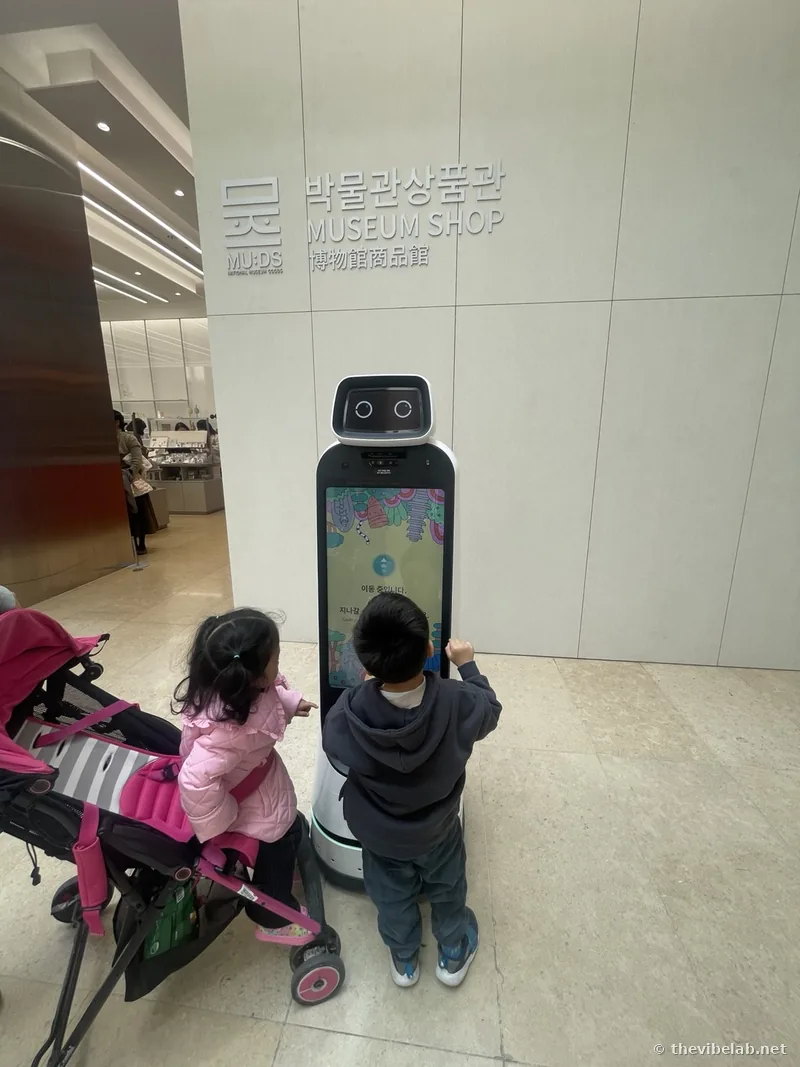
Guide robots roam around inside the museum. They’re white robots with a big screen and round eyes. When a robot first came toward them, our kids were scared. But after a little while they were touching the screen, and later they were trailing right behind it wherever it went. Honestly, my kids were more interested in this robot than in any gallery or artifact.
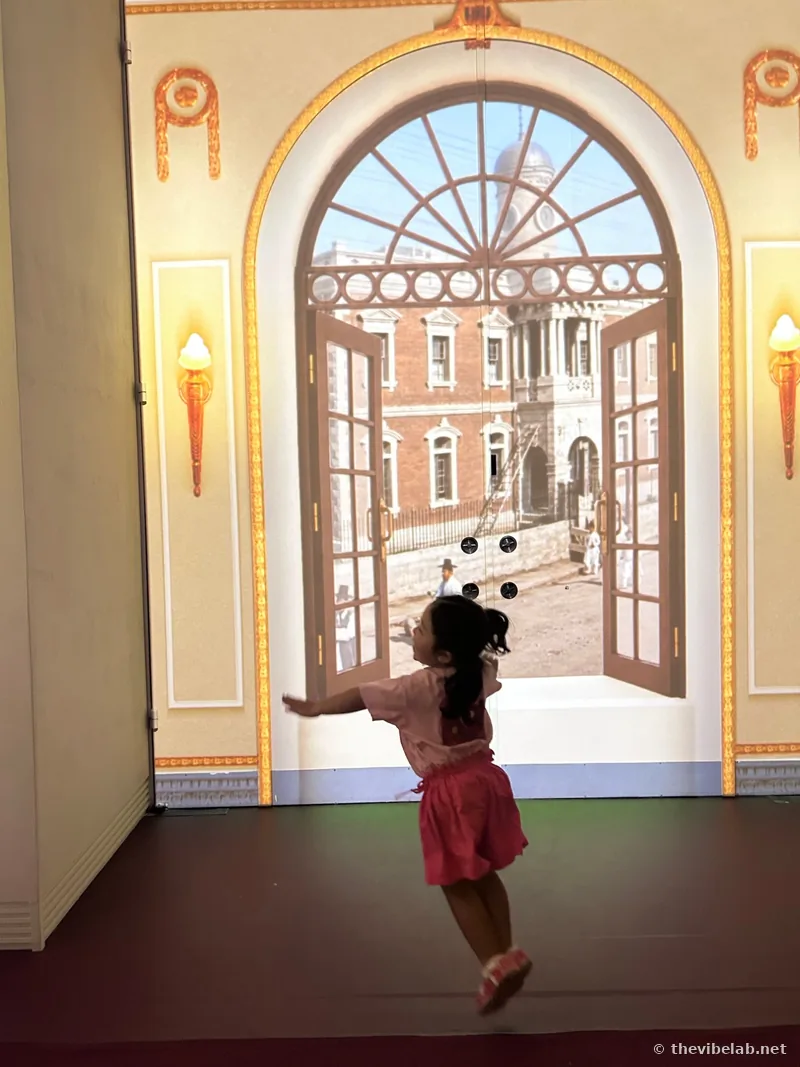
On the rainy summer day we also stopped by the Children’s Museum. There was a video wall shaped like a huge arched window, with the streets of old Seoul unfolding outside it. Our daughter spread her arms and hopped up and down in front of it.
Prehistory and Ancient History: scary in the dark, but they went in on their own
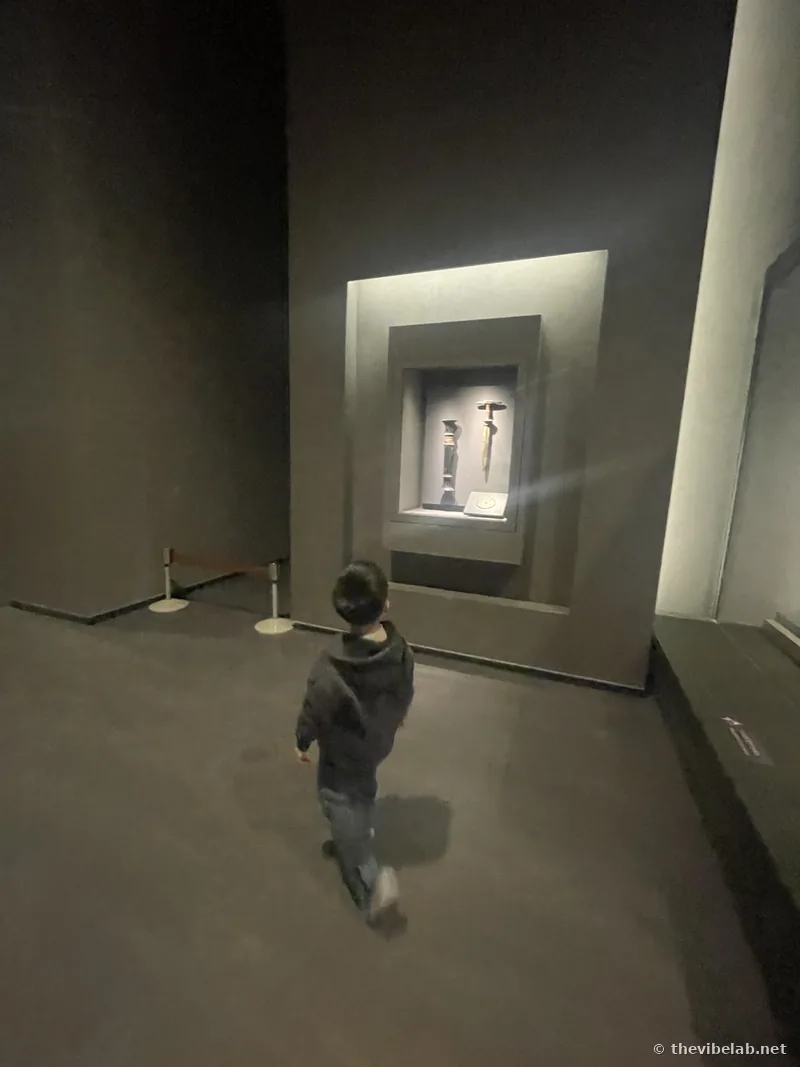
In autumn, we looked around the Prehistory and Ancient History galleries with the grandparents. These galleries are quite dark. Only the artifacts are lit and everything around them is pitch black, so at first the kids were scared. But a few steps in, they were pressed up against the display cases on their own, looking closely.
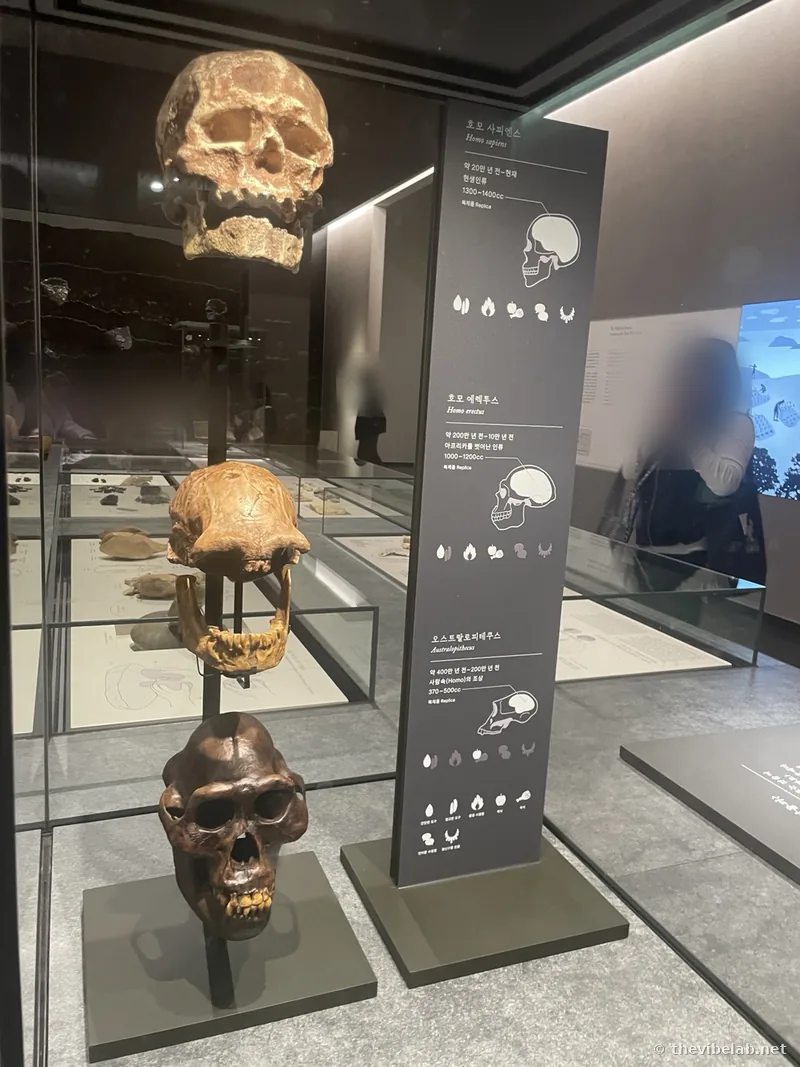
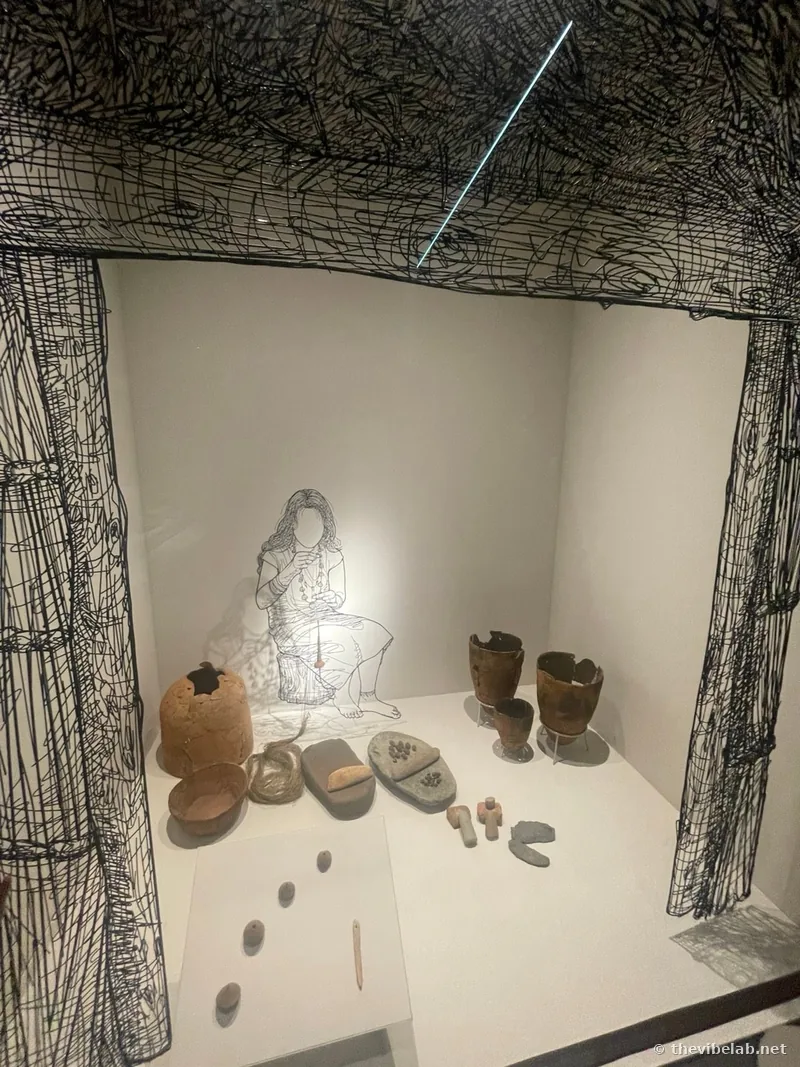
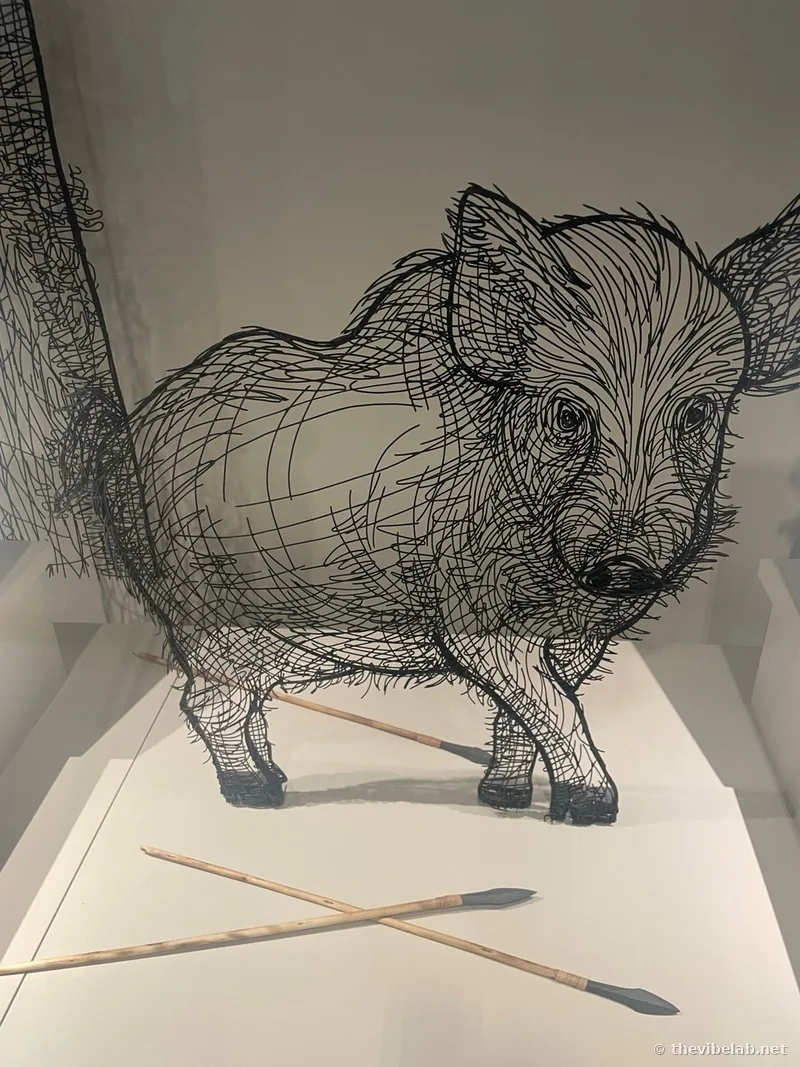
The fun part of this gallery is the sculptures that look like drawings made of wire. Inside a house made of wire, a woman is spinning thread, and in front of her are real pottery and stone tools. In front of a wire wild boar lay arrows that were used for hunting.
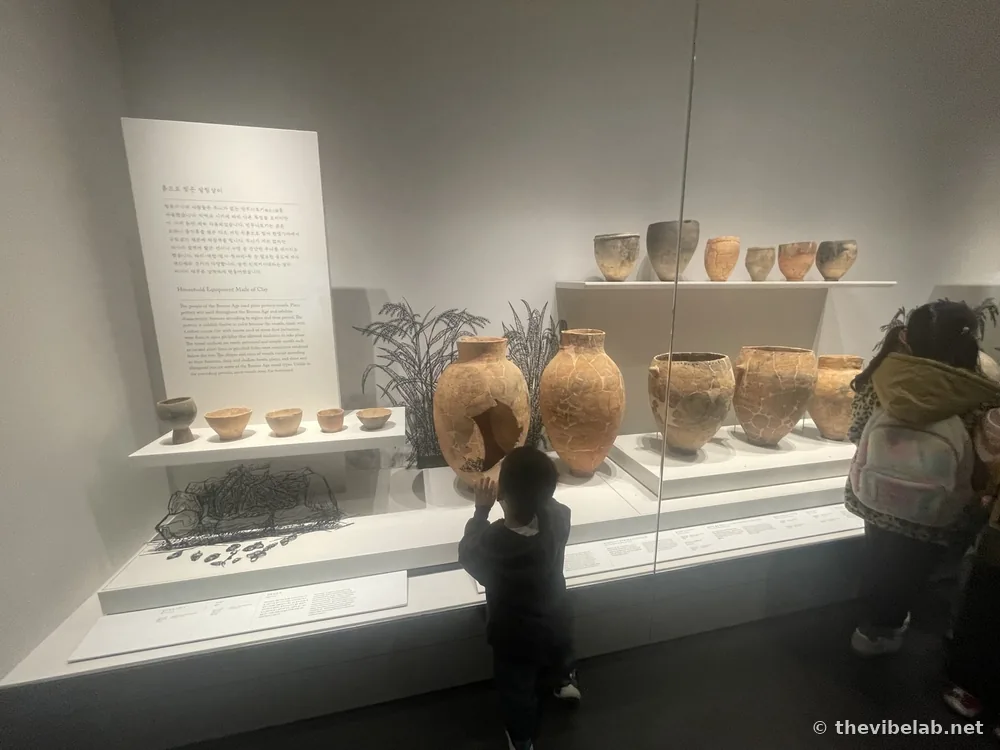
At the pottery case, our son leaned right up to the glass as if he wanted to touch a big jar. Plain pottery (민무늬토기) with no pattern and comb-pattern pottery (빗살무늬토기) covered in fine comb-like lines are laid out by period, so it’s easy to compare the differences.
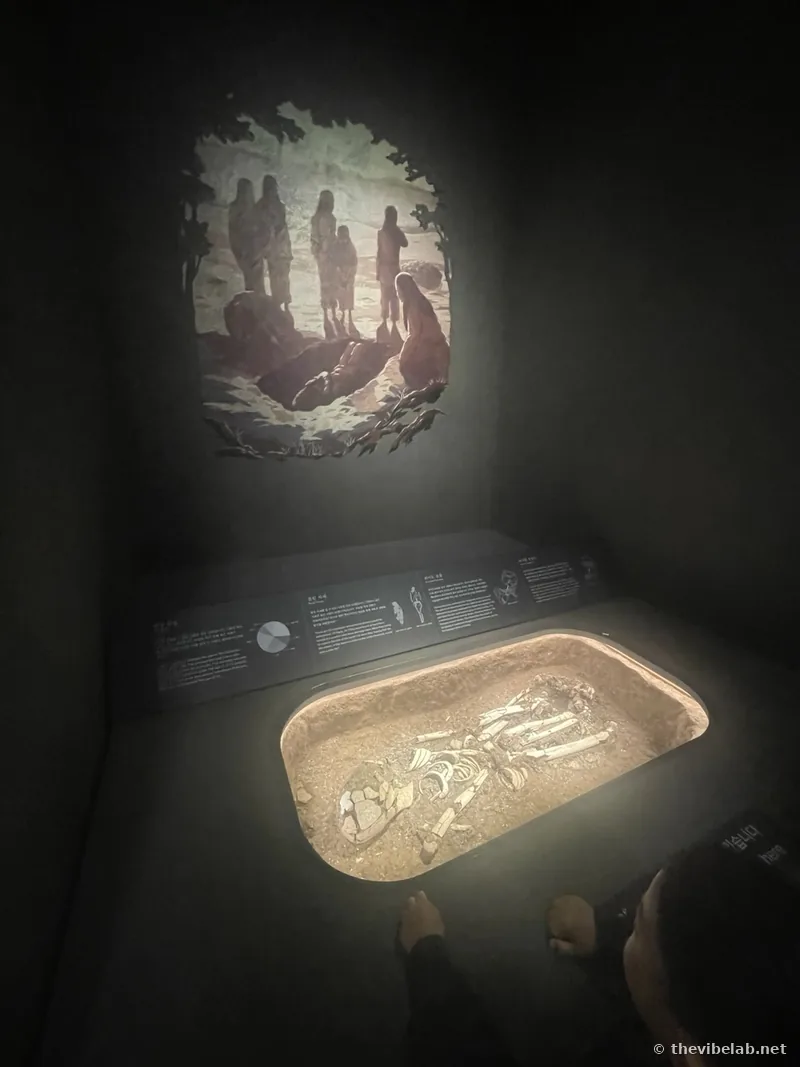
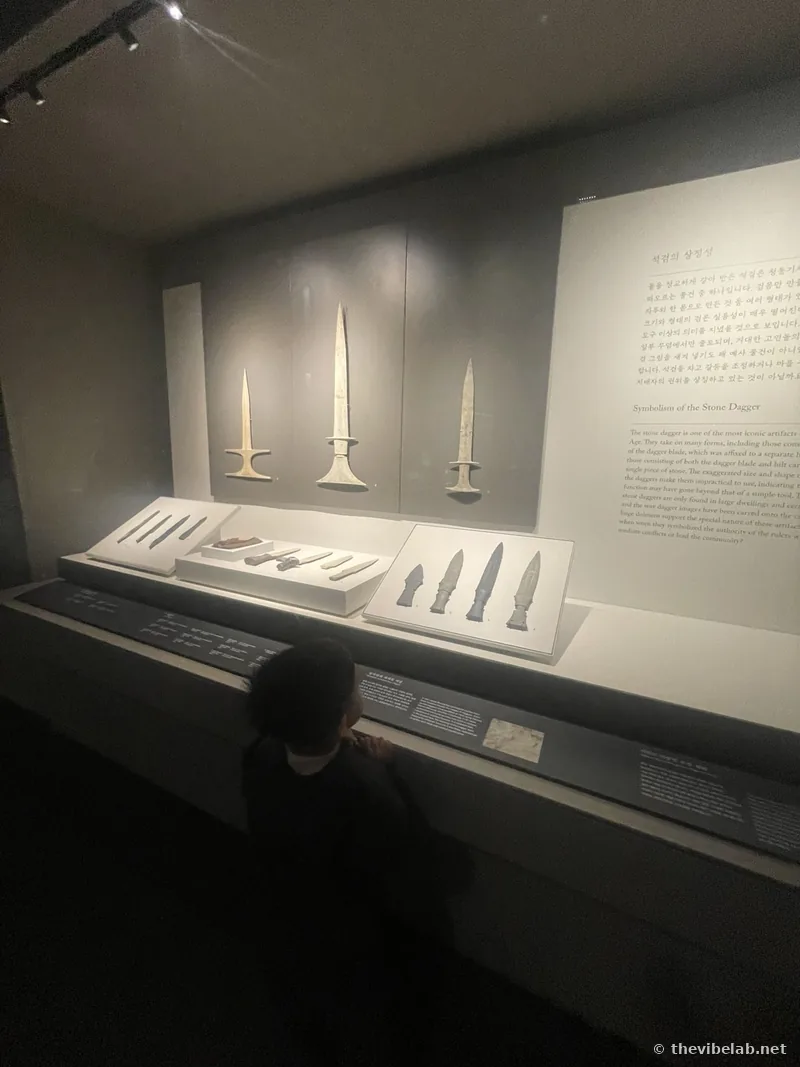
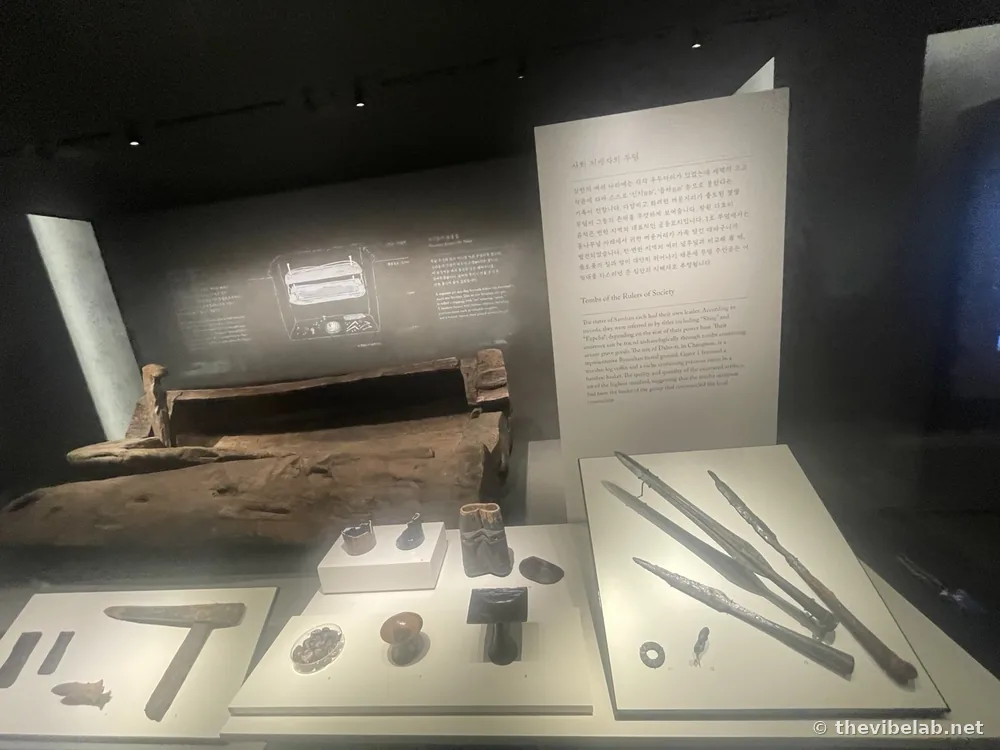
A little further in, there’s an ancient grave moved here just as it was found. Our son held the edge of the case and peered at the bones lying in the earth. Next to it are polished stone daggers (석검), made by grinding stone, and a log coffin carved out of a big hollowed log.
Rusty iron spears and a glittering gold crown
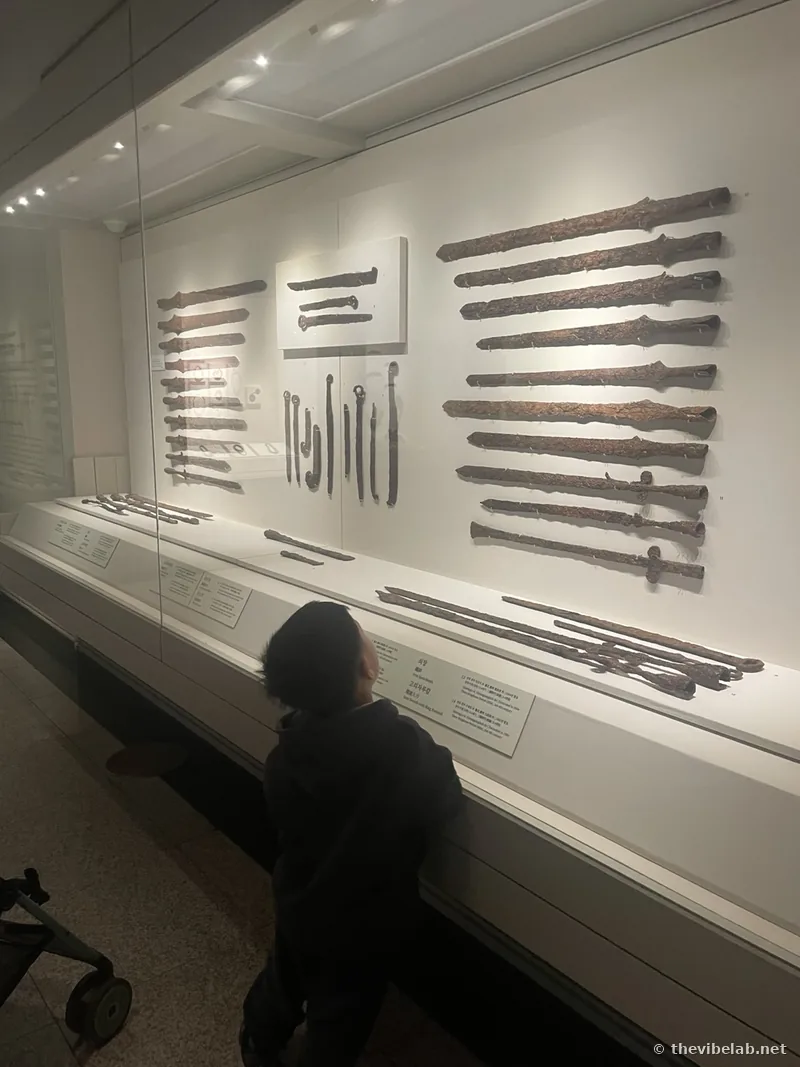
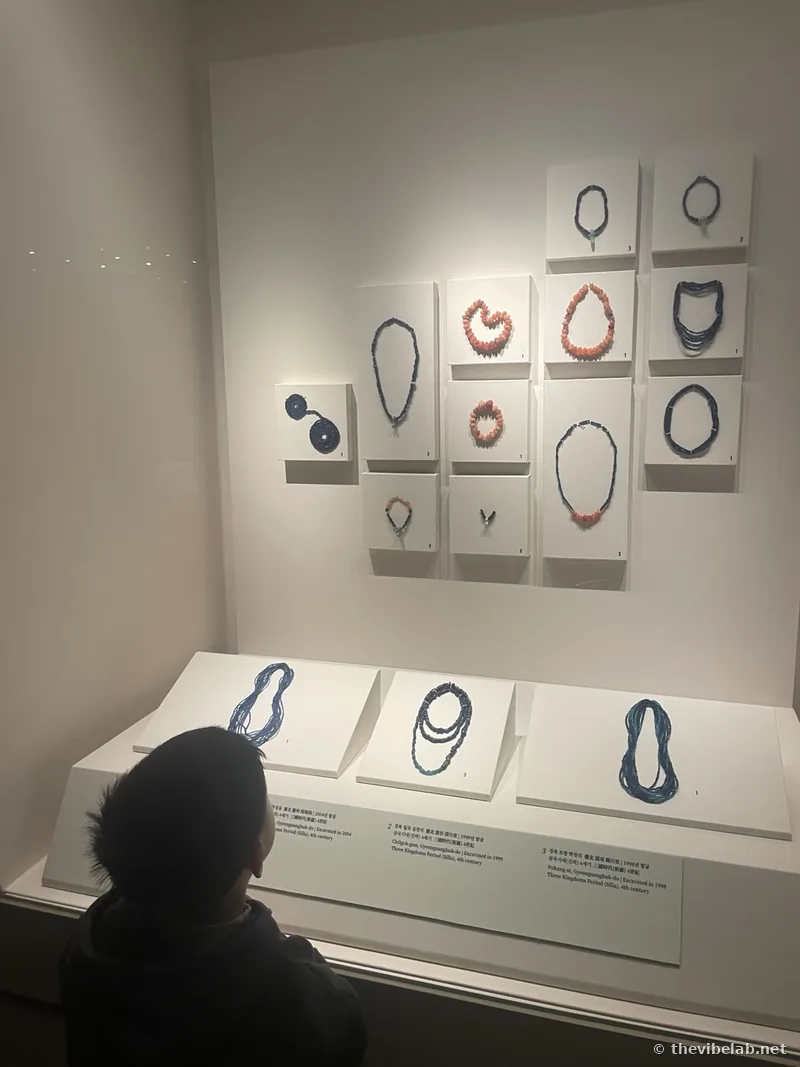
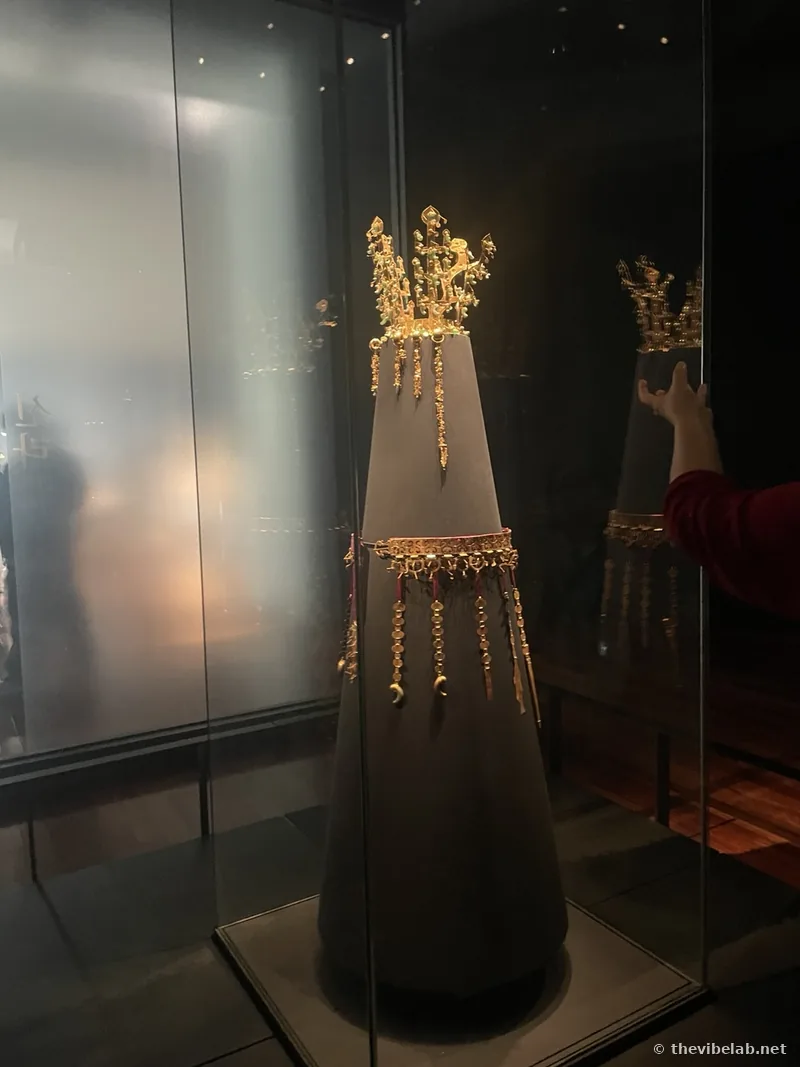
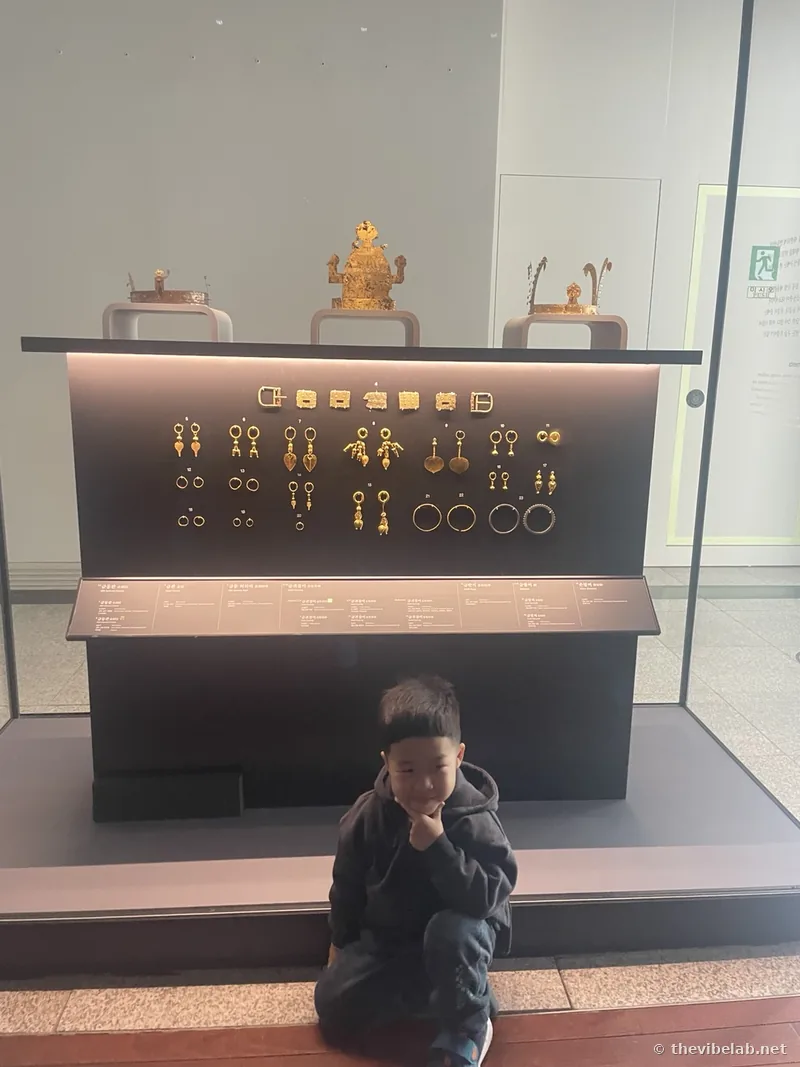
When you move on to the Three Kingdoms period, the mood changes. Our son tipped his head all the way back to look up at the rusty iron spears covering the wall. We also saw blue bead necklaces from Silla and a gold crown shining all by itself in the dark.
Know before you go to the National Museum of Korea (checked November 2026)
Opening hours and admission were checked on the National Museum of Korea’s official website (13 November 2026). The rest is pulled together from recent news articles and guides (2025–2026). Hours and fees can change, so be sure to check the National Museum of Korea’s official website again before you go.
- Admission: the permanent exhibitions and the Children’s Museum are free. You only buy a separate ticket for some special exhibitions.
- Hours: Mondays, Tuesdays, Thursdays, Fridays and Sundays 9:30 am–5:30 pm; Wednesdays and Saturdays 9:30 am–9 pm. Last entry is 30 minutes before closing.
- Closed: the whole museum is closed on January 1 and on the day of Seollal (Lunar New Year) and Chuseok (Korean harvest festival). On the first Monday of March, June, September and December (regular gallery closure days), the permanent galleries, special exhibition halls and the Children’s Museum are closed, but the outdoor exhibition area stays open. The remaining regular closure day in 2026 is Monday, December 7 (based on guide articles).
- Children’s Museum: book a time slot on the official website (Reservations → Children’s Museum), with booking opening at 00:00 Korea time, 14 days before your visit (5 sessions a day). One booking covers up to 5 people, and babies under 36 months and adults count too. Children must enter with an adult (children-only or adults-only entry isn’t allowed). If you don’t enter within 30 minutes of your session’s start, the booking is cancelled automatically (from visits on December 15, 2026, this becomes 20 minutes). After booking you get a mobile ticket by KakaoTalk or text message; just show it at the entrance. Even when a day is sold out, cancelled tickets often reappear about 30 minutes after a session starts. Children’s Museum phone: +82-2-2077-9647~9648 (based on guide articles).
- Booking as a foreign visitor: booking may require identity verification with a Korean mobile phone number. If you don’t have one, ask the Children’s Museum (+82-2-2077-9647~9648) or the Korea Travel Hotline 1330 (+82-2-1330 from abroad; English, Japanese, Chinese and more) before your visit.
- Getting there: Ichon Station on Subway Line 4 and the Gyeongui–Jungang Line connects to the museum by an underground passage (the museum walkway, 박물관 나들길).
- Parking: parking fees went up on September 30, 2025, and are reportedly 900 won per 30 minutes for cars, up to a maximum of 18,000 won a day. On weekends the line to get into the parking lot is said to be long, so public transport is easier.
If you’re going with kids
- Strollers: we brought our own stroller both times. If you don’t bring one, you can borrow one for free at the information desk on the first floor of the Permanent Exhibition Hall. There’s no reservation, it’s first come, first served, and it’s for children under 30 months and up to 15 kg. You leave an ID card when you borrow one (foreign visitors can use a passport). Rentals may not be offered during events.
- Children’s Museum & nursing rooms: strollers can be hard to use inside the Children’s Museum, so it’s easier to leave yours at the stroller parking by its entrance. Nursing rooms are on the first floor of the Permanent Exhibition Hall, opposite the museum shop, and near the Children’s Museum (the stroller and nursing-room details are based on guide articles).
- Bags & restrooms: large bags (over 55 × 40 × 20 cm) can’t be taken into the galleries. Leave them in the free lockers (PIN code, same day only) at the first-floor entrance of the Permanent Exhibition Hall or in front of the Children’s Museum. Every restroom in the museum has a diaper-changing table, and there are child-size toilets inside the Children’s Museum and in restrooms such as the one by the first-floor entrance of the Permanent Exhibition Hall (based on guide articles).
- Dark galleries: kids may be scared at first in dark places like the Prehistory and Ancient History galleries. Like ours, if you give them a little time, they’ll go in and look around on their own.
- Guide robots: they may startle kids at first, but they quickly become friends. Spotting where they are is part of the fun.
- Rainy days: from the outdoor plaza you can see N Seoul Tower in the distance. On rainy days the stone ground and steps get slippery, so hold your kids’ hands tight.
The National Museum of Korea is a free indoor outing where you can relax with your kids, even when it rains or the weather is bad.
Meet the National Museum of Korea in a hidden picture game
Photos: taken by the Vibe Lab team at the National Museum of Korea in Yongsan, Seoul, in summer and autumn. Please do not reuse without permission.