Korea National Arboretum in Autumn: Fall Foliage in Gwangneung Forest, a Day Trip From Seoul With Kids (Car Booking, Admission, Strollers)
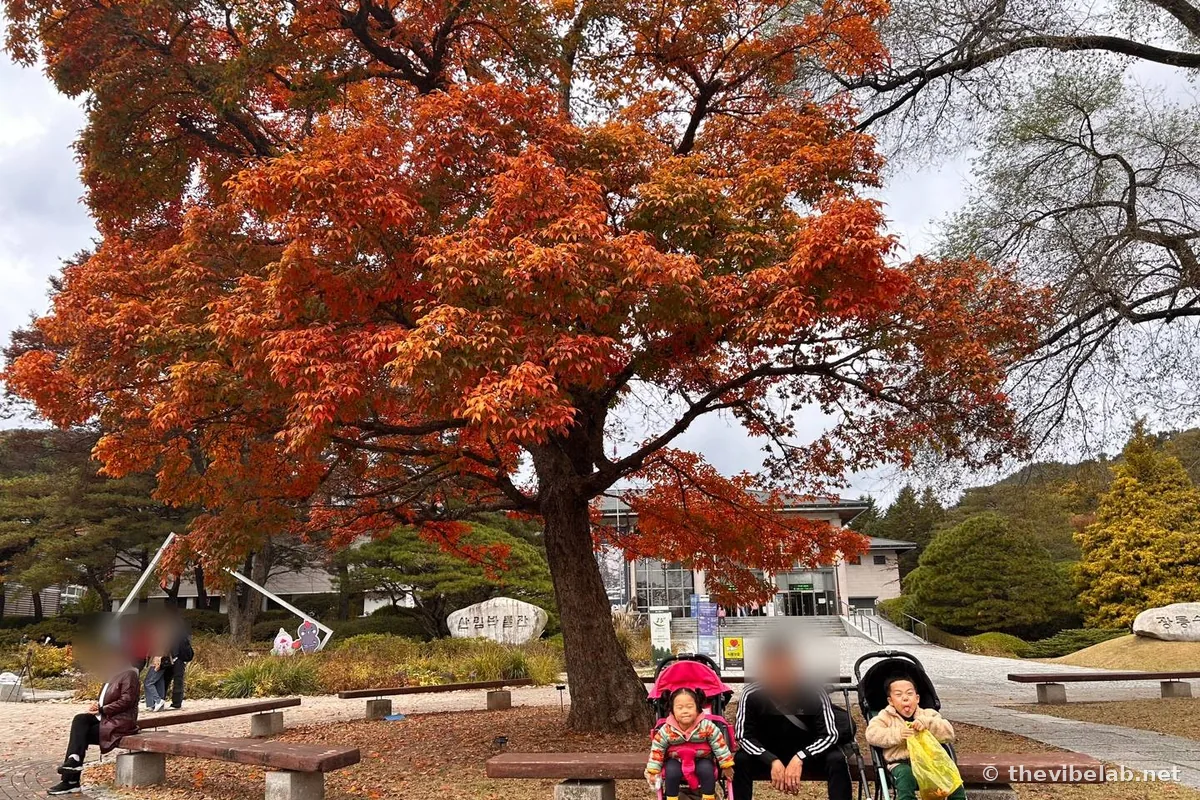
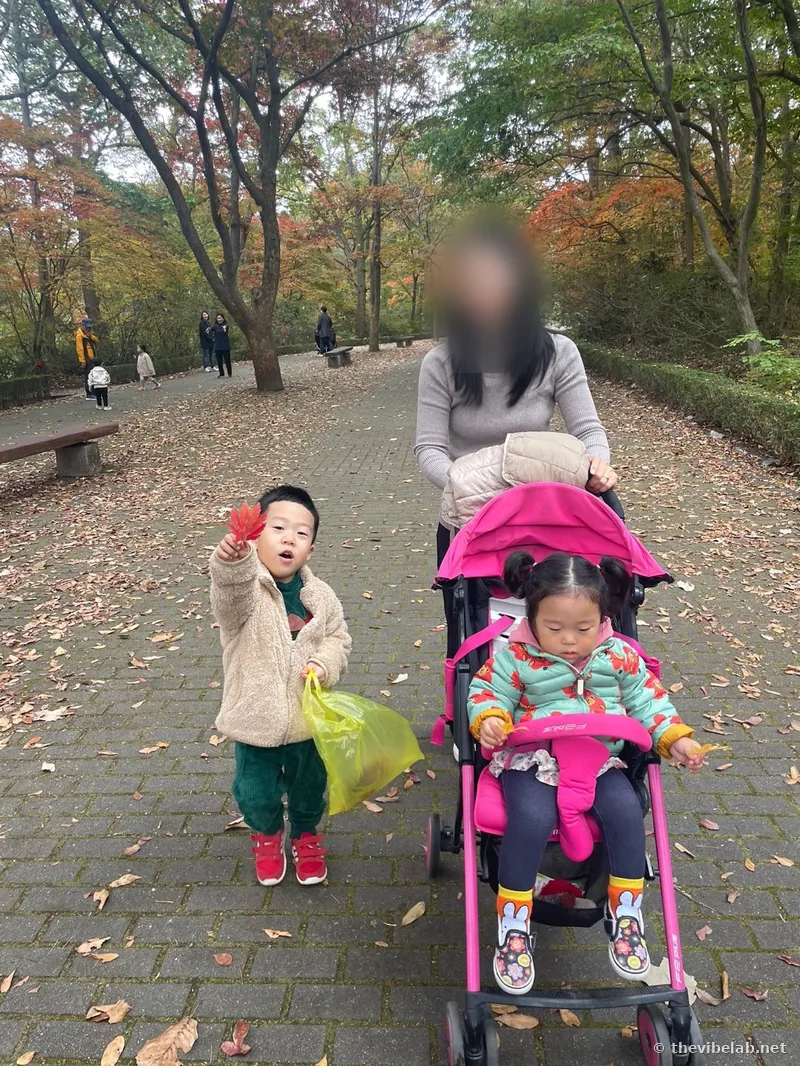
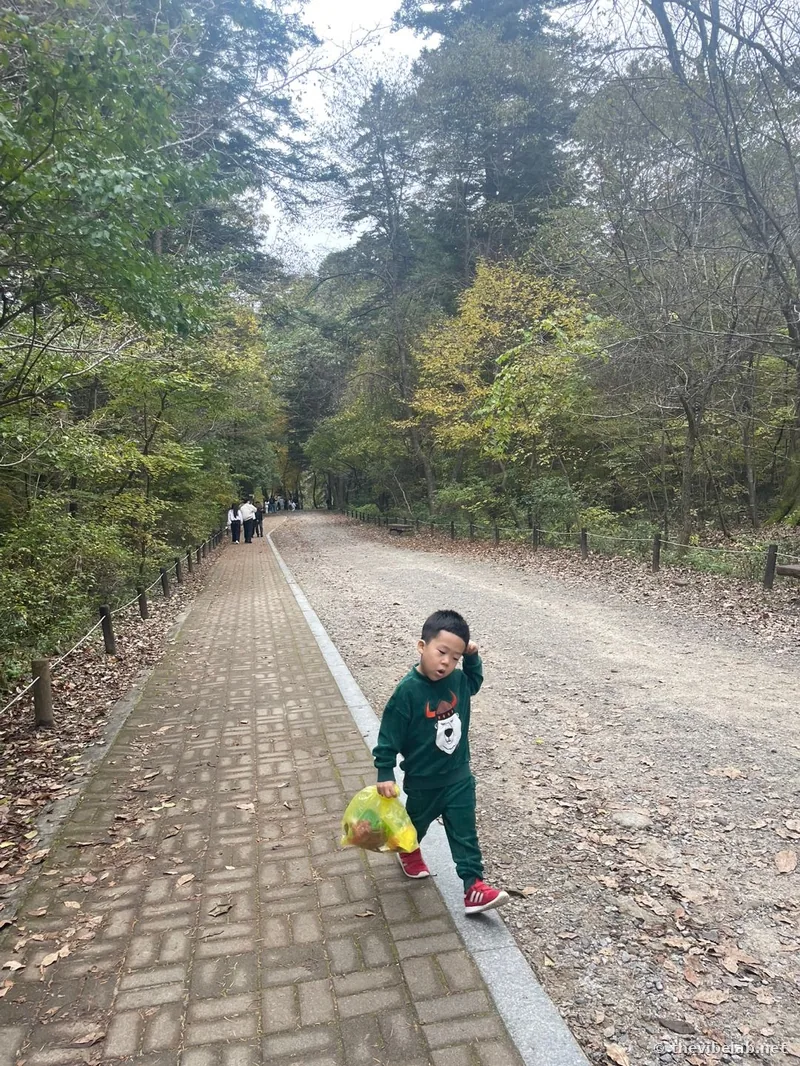
In early November 2024, with the fall colors at their peak, the four of us visited the Korea National Arboretum (국립수목원) in Pocheon, Gyeonggi Province, north-east of Seoul. Many people still call it the Gwangneung Arboretum (광릉수목원). Our daughter rode in the stroller, and our son carried a yellow plastic bag, picking up maple leaves that had fallen on the path as he walked.
Looking at the red and yellow leaves, the kids were absolutely thrilled. So that day, we made a family promise: let’s come to Gwangneung Arboretum every year.
What is the Korea National Arboretum?
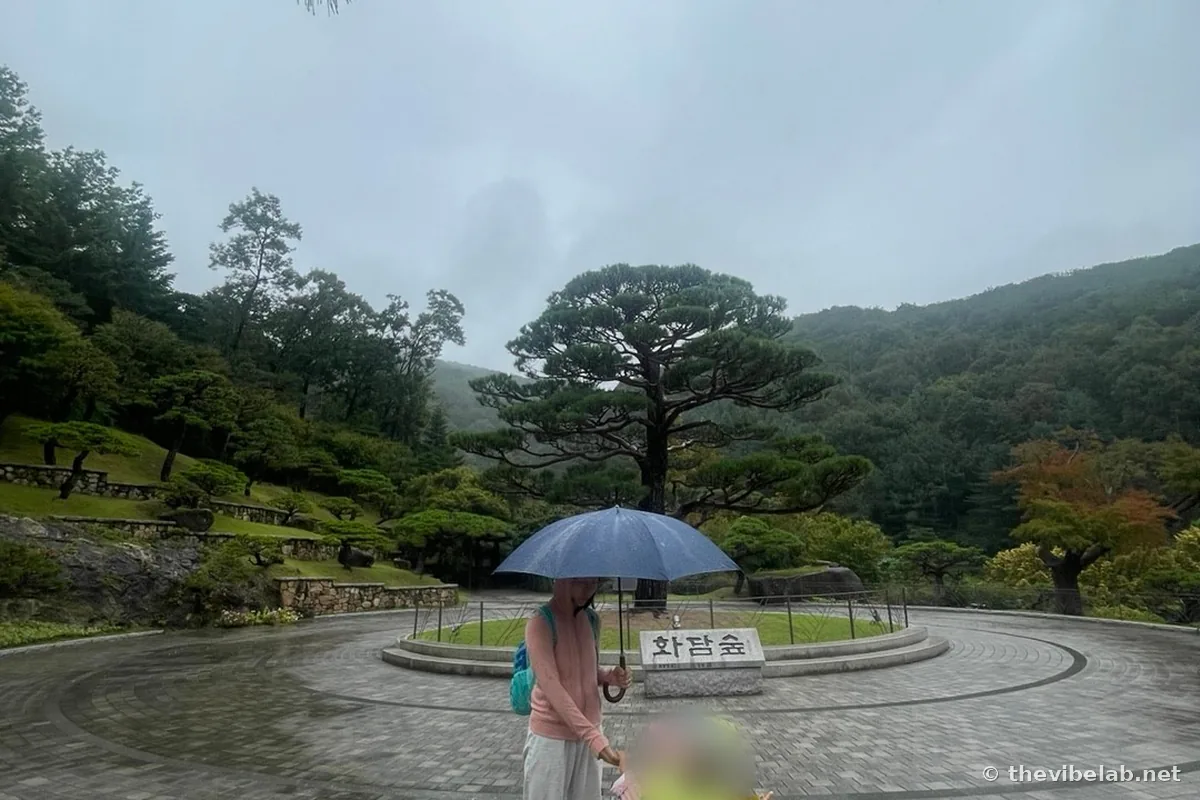
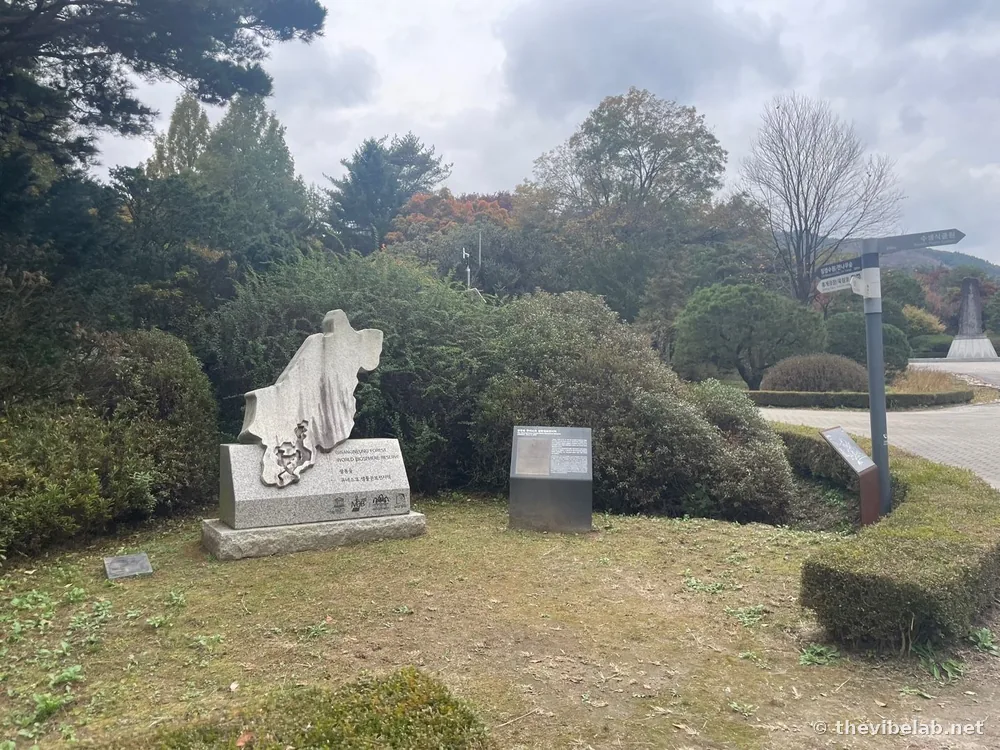
The Korea National Arboretum sits inside Gwangneung Forest (광릉숲). According to the information boards in the arboretum, Gwangneung Forest is Korea’s oldest protected national forest, designated in 1929, and a mature temperate forest of a kind that is rare worldwide. In June 2010 it was designated a UNESCO Biosphere Reserve.
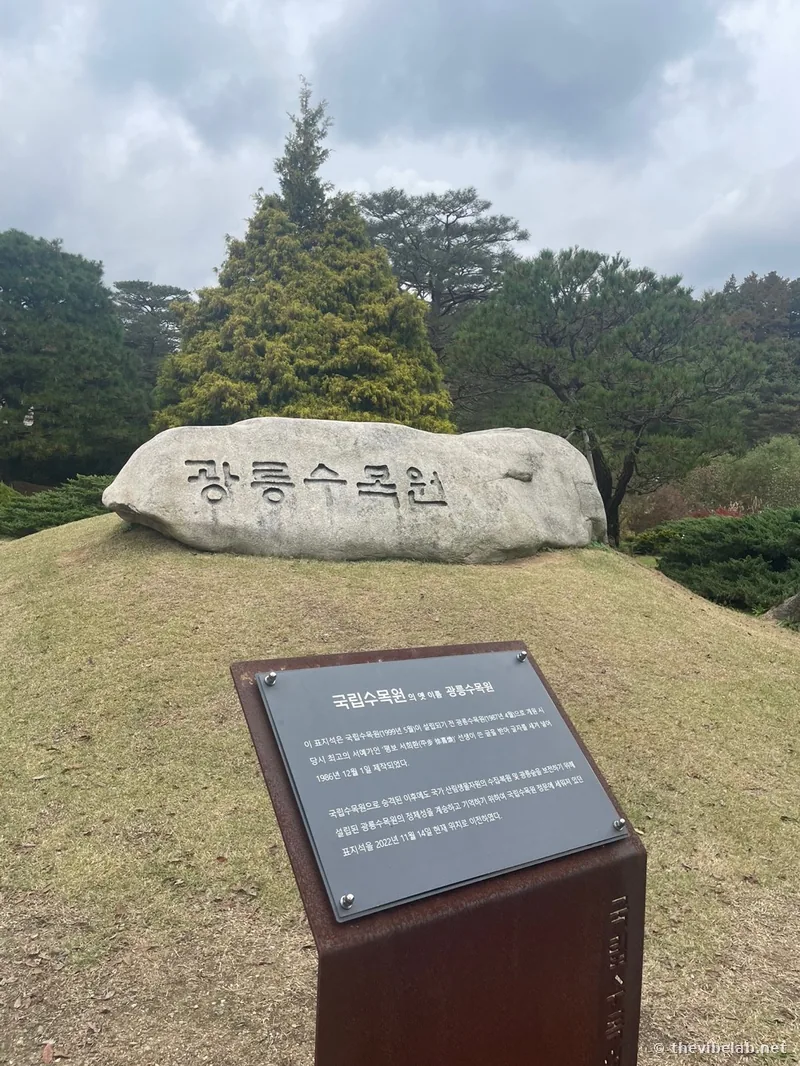
On a hill near the entrance there’s a stone sign carved with the words “Gwangneung Arboretum.” The board next to it says the stone was put up when it opened as Gwangneung Arboretum (April 1987), before it became the Korea National Arboretum. That’s probably why the name Gwangneung Arboretum still feels so familiar.
The red maple path: our little leaf collector
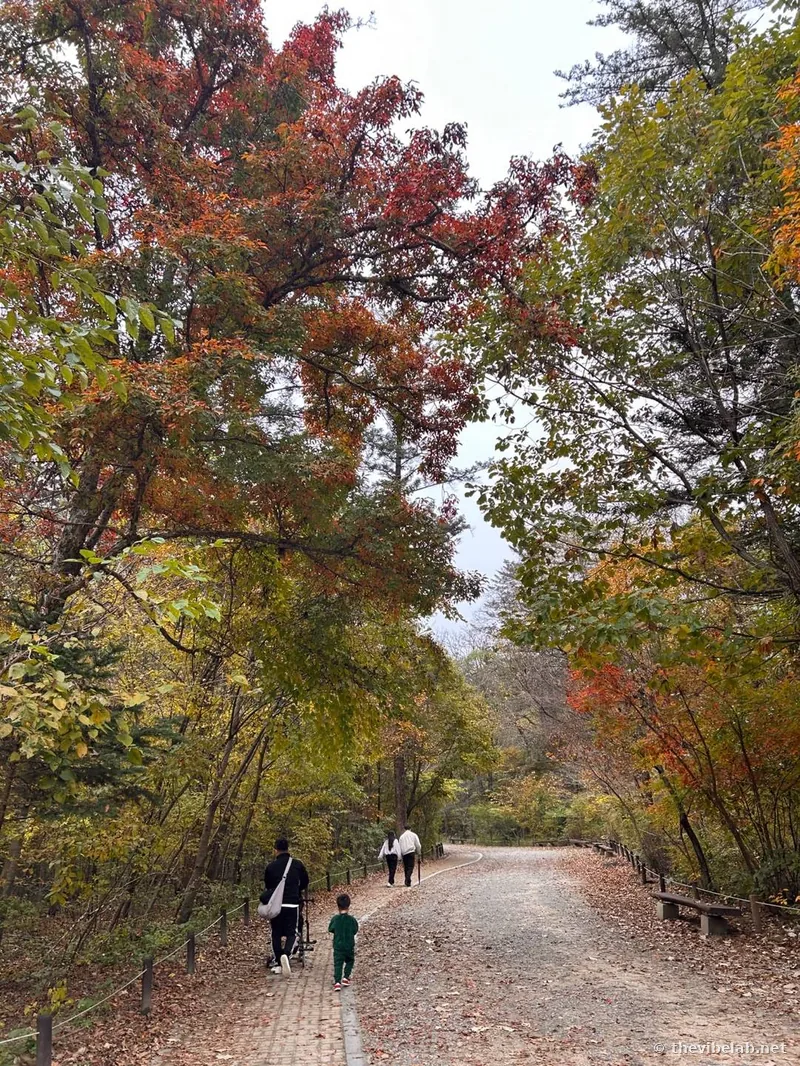
The most autumn-like spot that day was a wide paved path lined on both sides with red maple trees. A low, neatly trimmed green hedge runs along the edges, with long wooden benches placed here and there.
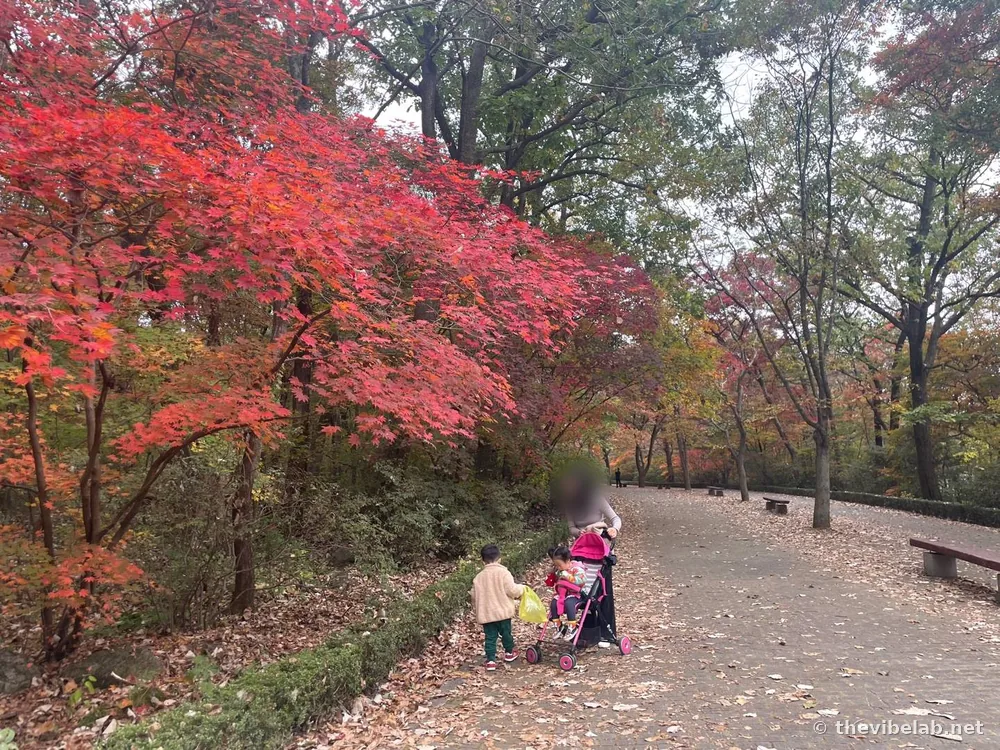
On this path our son was busy picking up fallen leaves and putting them in his yellow plastic bag. Whenever he found a red maple leaf he liked, he held it up high to show us.
The boardwalk and Yungnimho Pond
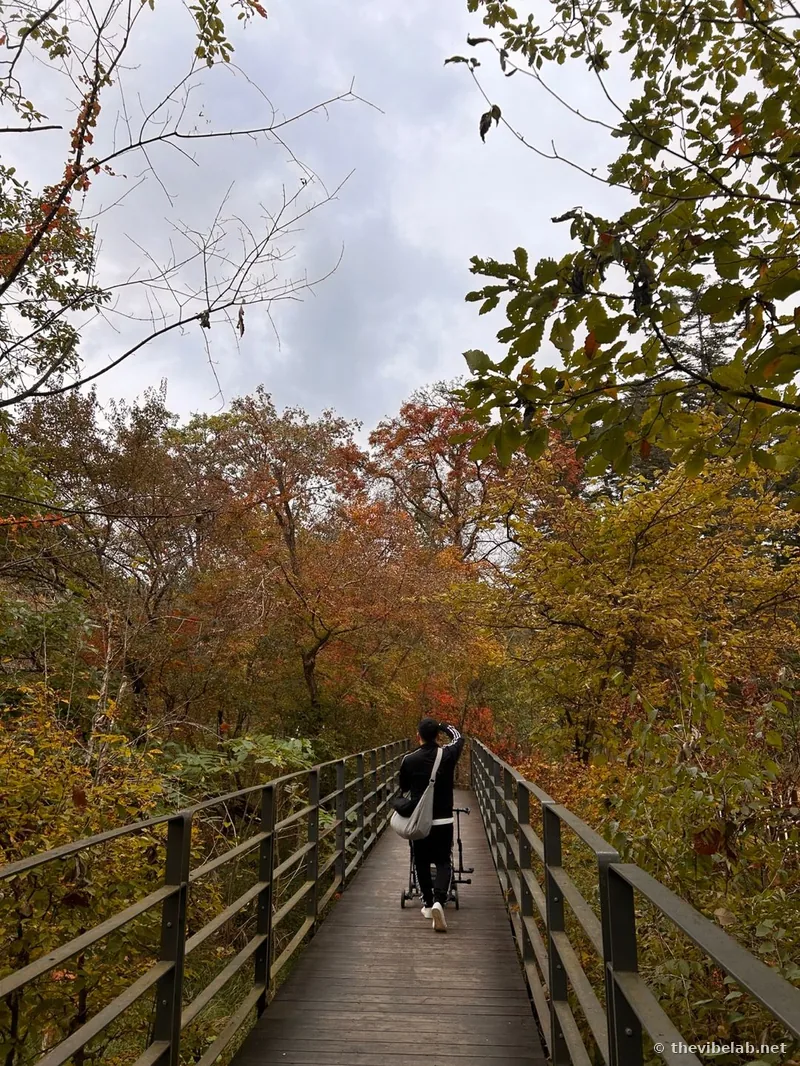
A wooden boardwalk with metal railings also winds through the forest. It’s wide enough that two strollers could easily pass each other. On both sides, orange, yellow and green were all mixed together.
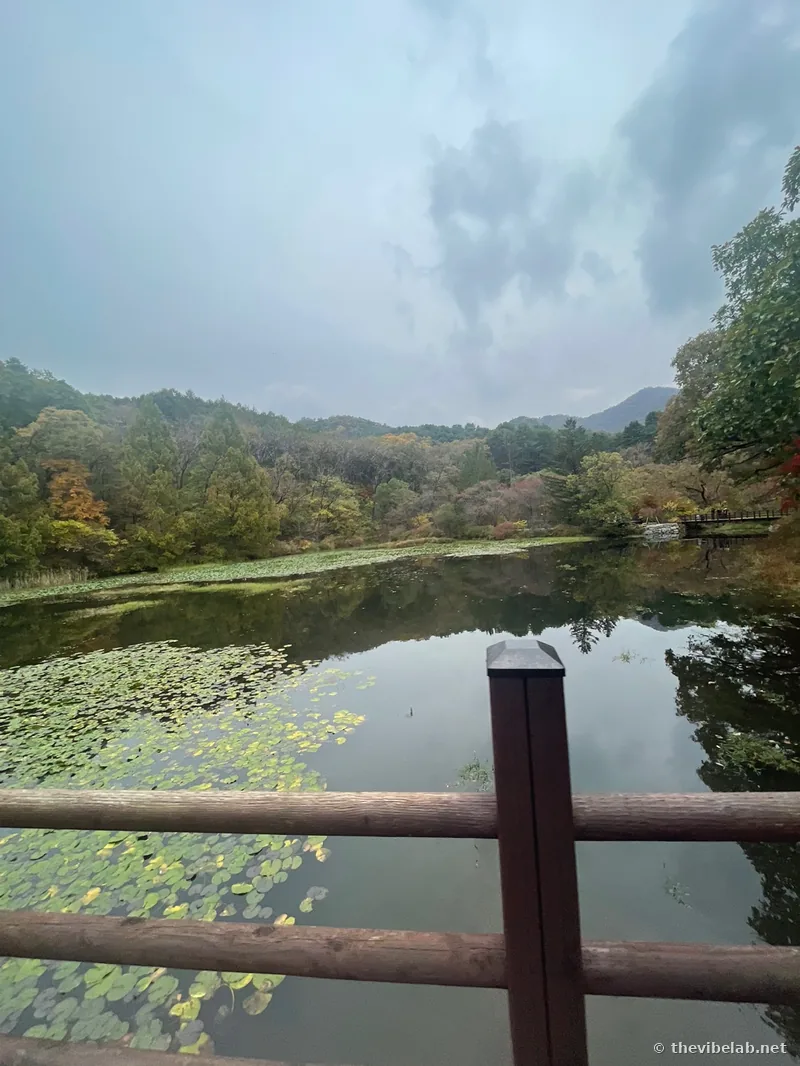
The pond marked as Yungnimho (육림호) on the arboretum map was full of floating lotus leaves. It was a cloudy day, so the water reflected the forest and mountains like a mirror.
The Forest Museum activity space
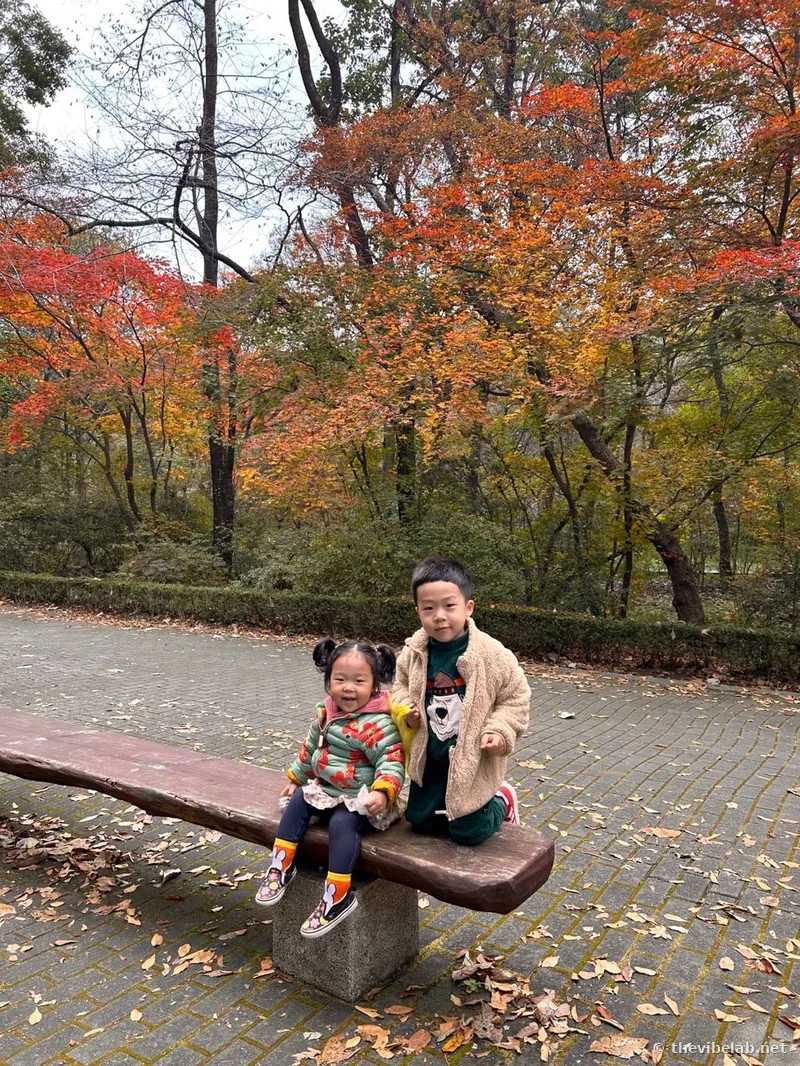
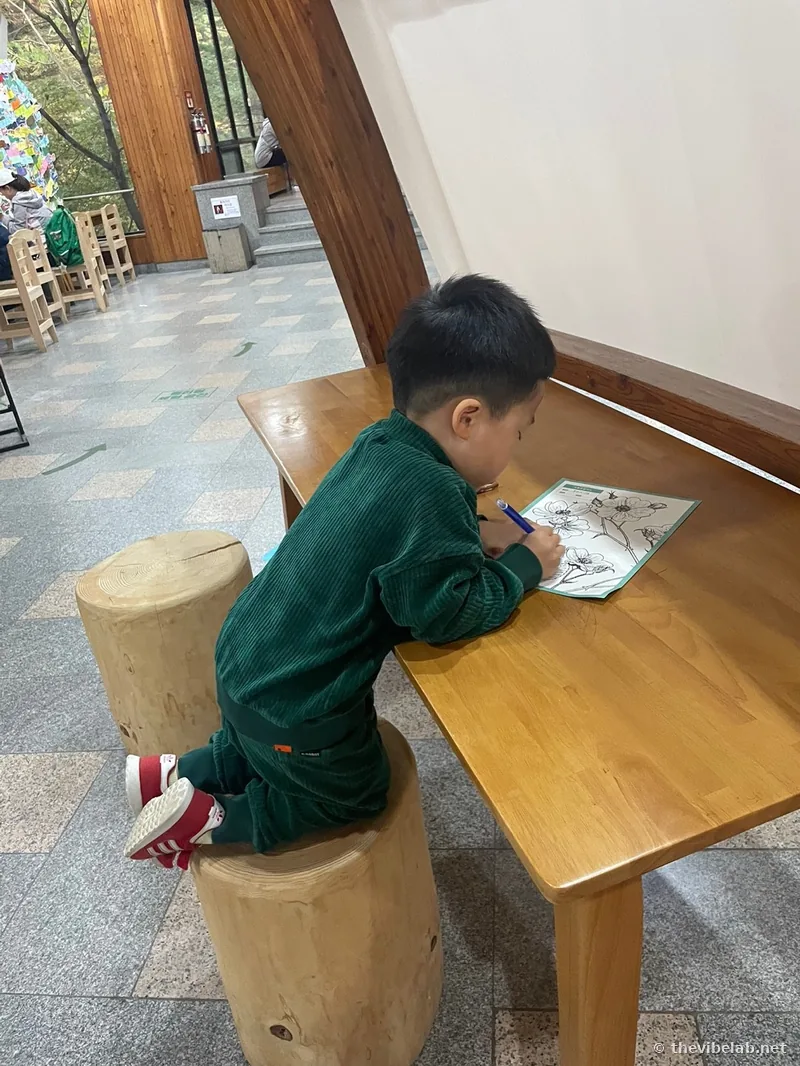
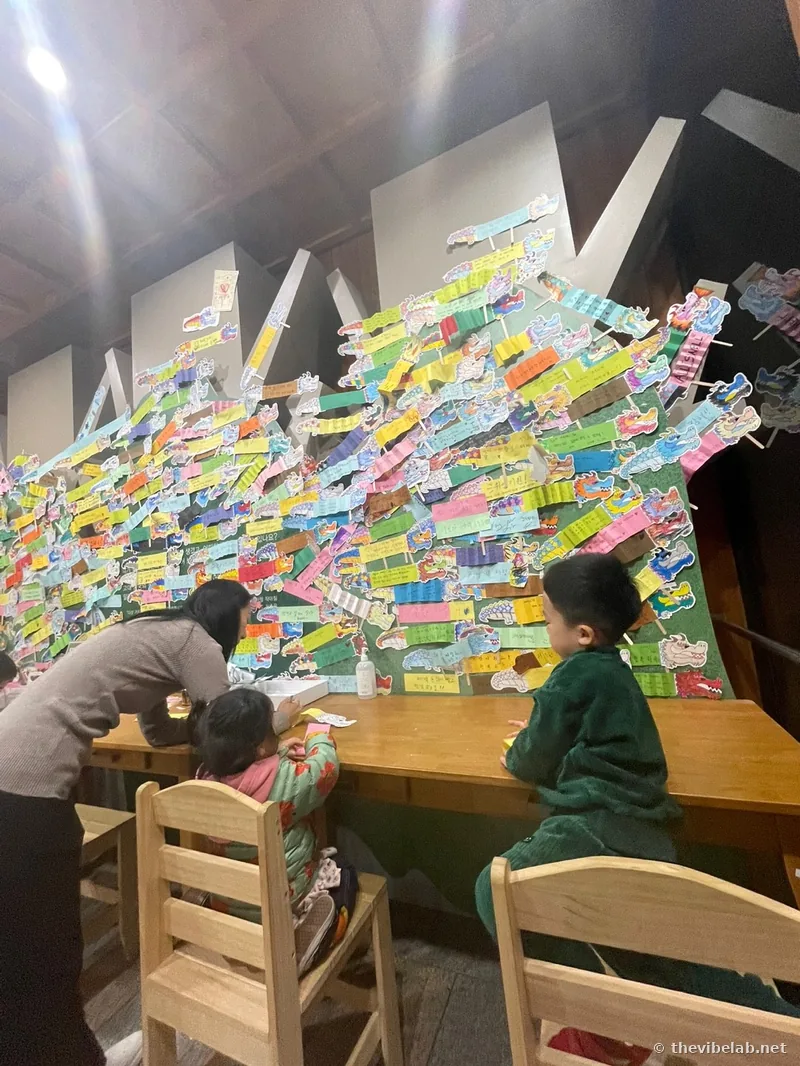
In front of the Forest Museum (산림박물관) stands one huge maple tree, with long benches placed around it. That’s where we took the photo at the top of this post. In the museum’s activity space, our son colored in a flower drawing, and our daughter did a paper-cutting craft with her mom. The wall was covered with colorful paper dragons made and stuck up by kids.
Know before you go to the Korea National Arboretum (checked November 2026)
The prices, hours and booking info below are pulled together from several guides to the Korea National Arboretum. These details change often, so be sure to check the Korea National Arboretum’s official website again before you visit.
- Coming by car? Book in advance: if you’re driving, you need to make a parking reservation first. Bookings reportedly open at midnight 30 days before your visit date and are split into morning and afternoon slots. The arboretum’s guidance says you can enter without a reservation if you come by public transport or on foot.
- Admission: adults 1,000 won, teens 700 won, children 500 won. Free for ages 6 and under and 65 and over. Parking is paid separately.
- Hours: April–October 09:00–18:00, November–March 09:00–17:00, with last entry 1 hour before closing.
- Closed: every Monday, January 1, and the Seollal (Lunar New Year) and Chuseok (Korean harvest festival) holidays. If a Monday is a public holiday, it closes on the next weekday instead.
- Forest Museum: it was open when we went in 2024, but there’s a notice that the Forest Museum is temporarily closed in 2026. If you want to see the museum’s activity space, check first whether it has reopened.
Here’s what was written on the visitor rules board inside the arboretum, too.
- Food is allowed only in the designated area (the rest plaza, 휴게광장), and only simple packed lunches like gimbap (Korean seaweed rice rolls). You can’t bring in alcohol, foods that create a lot of waste like watermelon or Korean melon, instant ramyeon, or soups.
- Pets are not allowed (except assistance dogs). Sports equipment like bicycles, balls, kick scooters and inline skates, as well as tents, sunshades and drones, are also banned.
- You can take photos, but not for commercial use, and there’s a request not to use tripods. Smoking is banned throughout the arboretum.
- Take your trash home with you.
If you’re going with kids
- Strollers: you can get around just fine with a stroller. But since there are quite a few dirt paths, if you’re coming by car we recommend a full-size stroller with big, sturdy wheels.
- Pack a lunch: we got hungry during our walk and ended up leaving earlier than we’d planned. Next time, we want to bring a packed lunch and walk for longer. Food is only allowed at the rest plaza, so plan your route ahead. There is no restaurant inside the arboretum, so gimbap, some fruit already cut up in a container, and water are enough.
- A bag for leaves: once kids start picking up leaves, their hands get full fast. Handing them a bag, like we did for our son, works well.
The Korea National Arboretum is peaceful and quiet, and perfect for spending a whole day walking. Our family has promised to come here every autumn. If you’re looking for a forest to walk with your kids during fall foliage season, keep the Korea National Arboretum in mind.
Meet the Korea National Arboretum in a hidden picture game
Photos: taken by the Vibe Lab team at the Korea National Arboretum (Gwangneung Forest) in Pocheon, Gyeonggi Province, in early November 2024. Please do not reuse without permission.